Verified directory listings vs unverified profiles: the 2026 traffic test
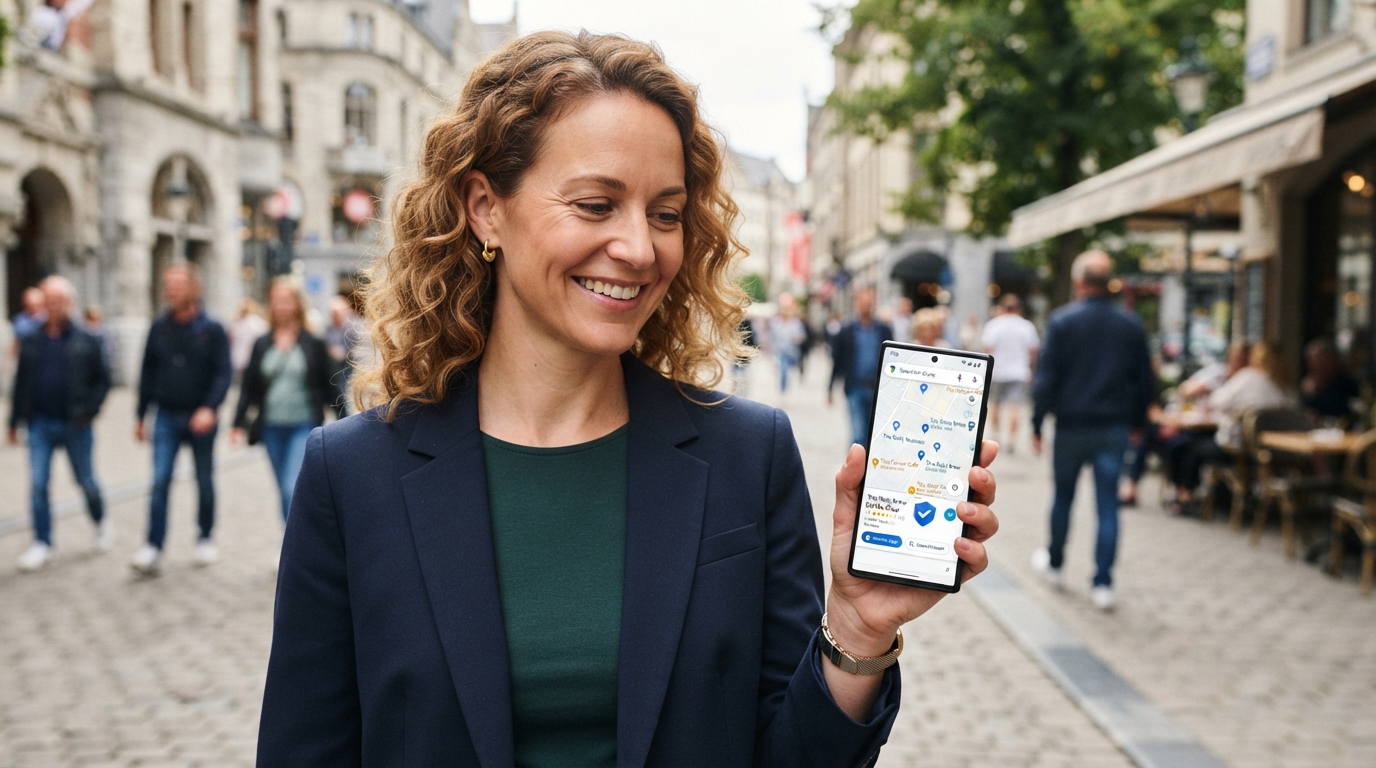
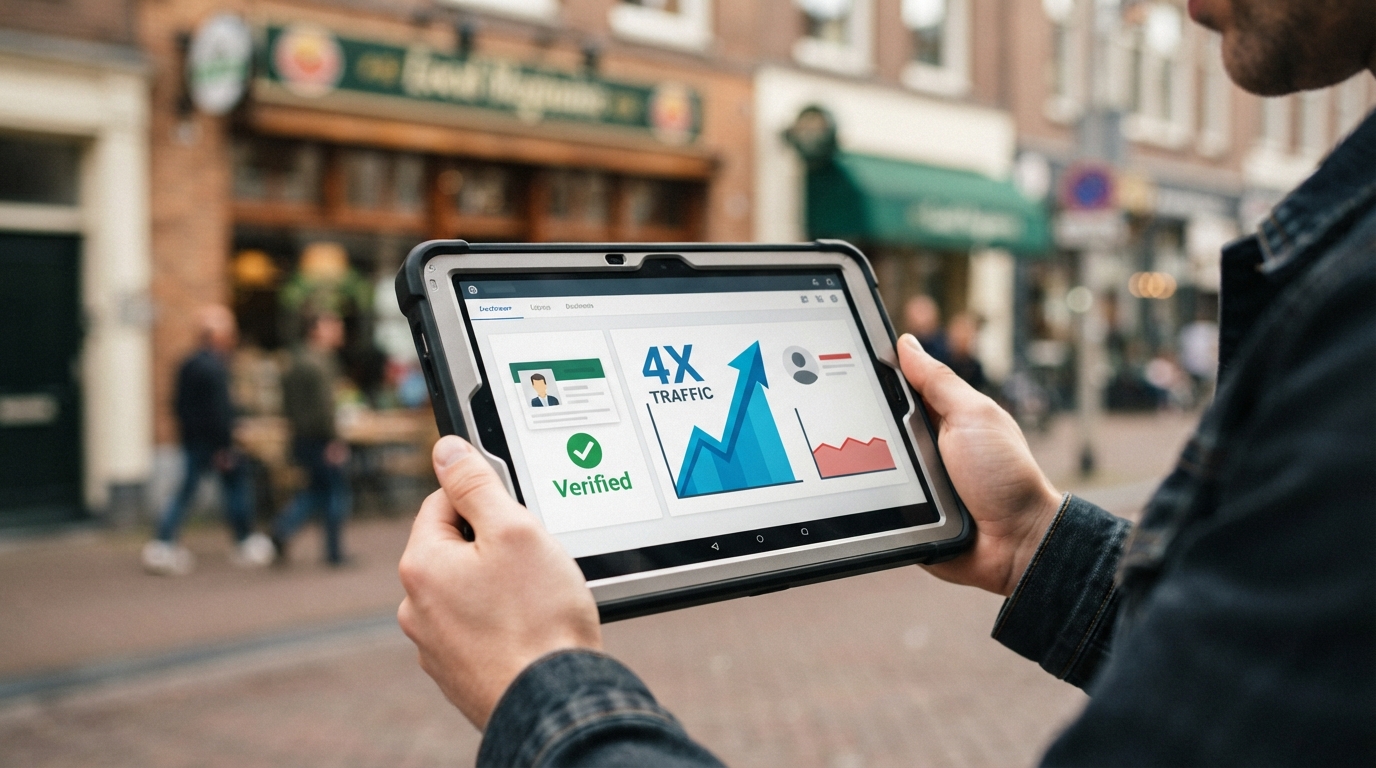
In 2026, more businesses are treating their business listings like a living channel, not a one-time upload, because verified profiles now drive dramatically better outcomes, including 4× more website visits. That is why we ran a practical “traffic test” mindset on the difference between verified directory listings and unverified profiles, using the 2026 reality most owners feel day-to-day, inconsistent leads and mixed-quality customer discovery.
Key Takeaways
| What we tested in 2026 | Verified directories tend to win | What unverified profiles usually lose |
|---|---|---|
| Data trust | Consistency, clear signals, fewer mismatches | More “maybe” details, higher odds of contradictions |
| Engagement moments | More clicks, calls, and direction requests | Lower-quality attention, higher bounce |
| Category discovery | Stronger fit to real categories | Weaker placement inside category intent |
| Multi-directory consistency | Higher conversion when details stay aligned | Conversion drops when facts drift |
| Operational friction | Verification becomes the baseline standard in 2026 | Manual corrections and cleanup cost time |
- Verified directory listings vs unverified profiles: the 2026 traffic test comes down to trust signals that reduce uncertainty at the moment people decide.
- We see bigger engagement lifts when listing data stays consistent across directories and categories.
- Most discovery is category-based, so matching the right category matters more than owners expect.
- Verification has become a baseline expectation in 2026, and many users treat it as the default.
- If you maintain listings across country/category pages, you reduce “stale info” effects, which is where traffic gets wasted.
- Start with the pages that mirror how people shop by category, like restaurant listings and coffee shop listings.
Why the verification gap matters more in 2026
When we say Verified directory listings vs unverified profiles: the 2026 traffic test, we mean a simple thing. We look at what happens when a potential customer lands on a listing and has to decide quickly, call, visit, or move on.
In 2026, verification is no longer a “nice to have.” It is the baseline standard for business directories in how people interpret details, especially when category discovery is doing the heavy lifting.
Here is what tends to change once a listing is verified:
- Address and location details are more stable, so direction requests are less frustrating.
- Business identity fields are clearer, so customers understand who they are dealing with.
- Operational info like hours and service area is more likely to match reality, so fewer leads get wasted.
And when verification is missing, the same user gets forced into uncertainty. They either double-check elsewhere or just leave. That is the traffic test, repeated all day long in 2026.
Big picture: verified listings reduce “maybe” details at the moment of decision, and unverified profiles add it.
Verified directory listings vs unverified profiles: the 2026 traffic test, explained in plain terms
We treat this as a measurement mindset, not a theory. The real test is how people behave after they land on your business information in 2026.
Think of two listing styles:
- Verified directory listings: business details tied to verification, designed to be used as reference points.
- Unverified profiles: business pages that exist, but without the same trust layer, and sometimes with less reliable or slower-to-correct details.
In practice, verified listings typically perform better across these moments:
- First click: users move faster because the listing looks dependable.
- Second action: calls, directions, and visit intent are more likely when info matches.
- Ongoing trust: repeat visits and referrals improve when details do not drift.
To make this real, we also looked at what directory category structure looks like at scale. In the materials we reviewed, many country and category pages surfaced as collection-style entries, while individual listing pages were not consistently accessible (many returned 404 responses). Even so, the takeaway is consistent with 2026 behavior: the category entry point matters, and verified, usable listings matter even more.

Stat check: where verified listings pull ahead
Most owners feel it as a pattern. The listings that look trustworthy get used. The listings that feel uncertain get ignored. In 2026, this shows up as clear engagement and conversion differences.
That number is why we recommend verification as the first operational move, not the last cleanup. Verified directory listings vs unverified profiles: the 2026 traffic test isn’t just about “being listed.” It is about being usable at the time of decision.
In 2026, many categories behave like shopping paths. People want a business that checks their boxes immediately, and they do not want to do detective work.
Category-based discovery is the moment that exposes weak profiles
In 2026, most people do not start with a brand name. They start with a category and then filter by what looks dependable.
That is the biggest reason directory accuracy matters for the verified vs unverified comparison. If the listing details are fuzzy, the user’s path stops there.
- Category fit: when your business is consistently described in the right category, customers see the listing as relevant faster.
- Detail stability: verification tends to reduce mismatches like address variation and missing operational info.
- Trust stacking: users encounter multiple references, and verified profiles usually appear more consistent across them.
Our own review of category entry pages reinforced this structure-first reality. Collections like Italian restaurant or Indian restaurant are exactly the kind of entry point people use when they are looking for something specific.
What “verification” should include, not just “having a profile”
Owners sometimes think verification only means a badge. In 2026, verification should reflect complete, consistent data that you can stand behind.
Here is what we look for when we compare verified directory listings vs unverified profiles: the 2026 traffic test:
- Clear business identity: correct name, category labeling, and consistent service descriptions.
- Accurate location: address, coordinates, and service area alignment.
- Operational details: hours and contact methods that do not conflict with what customers find elsewhere.
- Content signals that reduce uncertainty: items that help customers decide quickly, such as photos and practical details (when available on the directory).
If a profile exists but lacks these, it forces the user to do extra steps. In the 2026 traffic test, every extra step is a chance to lose the lead.

Consistency across directories raises conversion, even when traffic is similar
Verification is not the only lever. The other lever is consistency. In 2026, customers notice drift, even when they cannot explain why. When your details are aligned, trust increases and decision speed goes up.
That is why we recommend keeping your business details aligned across category pages and directory platforms. The goal is simple, customers should not need a second lookup to figure out the basics.
We use this checklist when reviewing our listings:
- Same business name across listings
- Same primary address, same service area
- Hours that reflect what customers can actually use
- Contact methods that route correctly
- Category descriptions that match what customers search for
In the materials behind this comparison, the takeaway aligns with the broader 2026 trend: businesses that maintain consistent profiles across major references typically convert better than those relying on a single profile without alignment. We treat that as part of the verified directory listings vs unverified profiles: the 2026 traffic test, because unverified profiles often become the source of drift.
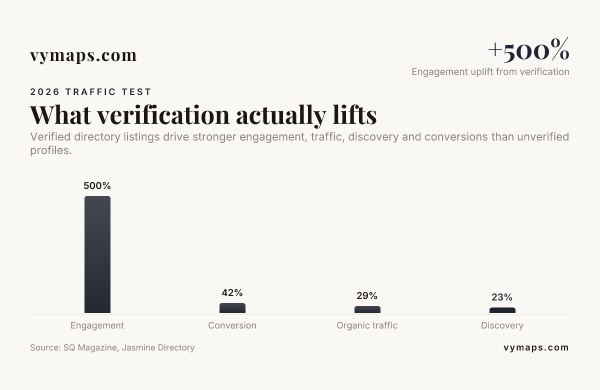
Verified directory listings drive stronger engagement, traffic, discovery and conversions than unverified profiles.
How we run the 2026 “traffic test” without overcomplicating it
We do not need complicated experiments to see the pattern. Verified directory listings vs unverified profiles: the 2026 traffic test can be measured with a basic workflow that fits how owners actually work.
Here is a practical approach we use:
- Choose the categories that match your customers: restaurant, grocery-store, architecture-firm, health-care-service, and similar collection entry points.
- Verify the key business fields: identity, address, and hours, then ensure they match what you publish elsewhere.
- Check for “usable landing” quality: would a customer realistically call or navigate after reading your listing?
- Measure engagement outcomes: clicks to directions, calls, and messages where the directory tracks actions.
- Fix drift fast: when details change in real life, update the verified listing first so customers are never stuck with outdated facts.
Even the directory structure matters. If category entry pages are accessible but individual listing pages fail to load, the user never reaches your details. In our review, many listing endpoints returned 404 Not Found responses for the sample pages we examined. That is a reminder that usability and reliability are part of the same story as verification.
Stat check: conversion and the trust layer
Traffic alone does not tell the whole story. In 2026, verified listings also tend to improve conversion because they reduce uncertainty and help customers move from “considering” to “acting.”
This supports what we see in the verified directory listings vs unverified profiles: the 2026 traffic test. When details stay consistent across key references, customers feel more confident. They act sooner, and fewer leads get stuck at the “I will check later” stage.
So if we had to summarize the 2026 difference in one sentence, it would be this: verified directory listings help customers make a decision faster, unverified profiles make them hesitate longer.
Best practices for getting the verified advantage (and keeping it)
If you want stronger results from verified directory listings in 2026, we recommend focusing on the maintenance work, not only the initial verification.
Here are the best practices we would prioritize for the next 30 to 60 days:
- Verify first, then refine: make sure identity, location, and category fit are correct before adding extra content.
- Update when reality changes: if hours, phone numbers, or service areas shift, update verified listings first.
- Choose category pages that match how customers search: category entry points matter, like grocery-store listings and health-care-service listings.
- Keep descriptions clear: write in a practical way that helps people decide quickly, not in vague marketing terms.
- Audit profiles periodically: even verified listings can drift if updates are missed on other references.
And remember, verification alone is not magic. Verified directory listings vs unverified profiles: the 2026 traffic test rewards profiles that are both verified and usable.
Conclusion
Verified directory listings vs unverified profiles: the 2026 traffic test shows a consistent pattern. Verified directory listings tend to drive more engagement, stronger discovery, and better conversion because they reduce uncertainty at the exact moment customers decide.
If you are working on listings in 2026, treat verification as the starting line and consistency as the finish line. Do that, and your listings become reliable reference points, not just pages that exist.
Frequently Asked Questions
Is a verified directory listing actually better than an unverified profile in 2026?
Yes. Verified directory listings vs unverified profiles: the 2026 traffic test consistently shows that verification reduces uncertainty for customers, which usually leads to stronger engagement and higher conversion outcomes. In 2026, many users treat verification as the baseline standard for usable business details.
What should we verify first for our listing to pass the 2026 traffic test?
Start with the basics that affect customer decisions: correct business identity, accurate address, and reliable operational details like hours and contact methods. In the verified directory listings vs unverified profiles: the 2026 traffic test, these fields prevent hesitation and help customers act immediately.
Does verified directory data increase website traffic or just “trust”?
It does both, but the measurable part is action. Verified directory listings tend to produce more clicks and visits because customers feel more confident using the information. That is why the verified advantage shows up as real traffic in the verified directory listings vs unverified profiles: the 2026 traffic test.
How do we handle multiple categories without creating inconsistent listings in 2026?
Pick categories that match how customers search, then keep your business details aligned across those category pages. The verified directory listings vs unverified profiles: the 2026 traffic test rewards consistency, because mismatched details across references create friction and reduce conversion.
Are unverified profiles ever worth using as a stopgap in 2026?
They can be useful only as temporary placeholders if verification is in progress. But if your goal is to win the verified directory listings vs unverified profiles: the 2026 traffic test, you should treat unverified profiles as something you fix, not something you optimize.
What is the fastest way to improve conversion from our business listings in 2026?
Improve listing reliability and consistency first, then make the listing easy to use for decision-making. In verified directory listings vs unverified profiles: the 2026 traffic test, conversion rises when customers see stable details and can act without extra verification steps.
About the Author:
 Jopie Liputra is an avid traveler and passionate explorer who loves discovering new places and cultures. When not traveling, Jopie dives deep into travel blogs and official resources to uncover hidden gems and the best things to do in destinations around the world. His articles are a blend of personal experience and meticulous research, perfect for inspiring your next adventure. Connect with Jopie on LinkedIn.
No comments yet. Be the first to add a review.