High-Utility Navigation for International Travelers: The Practical Setup That Actually Helps in 2026

High-Utility Navigation for International Travelers is no longer a “nice-to-have” in 2026, because the global travel market is projected to reach $1.67 trillion in gross bookings, putting more people on more routes at once. When destinations get crowded and decisions get faster, your navigation plan needs to be short, specific, and resilient.
Key Takeaways
Plan for the offline parts. Download maps and key transit details before you leave, then verify you can open them without data.
Use one “source of truth” per task. Routes, place details, and accessibility should come from the same app ecosystem when possible.
Build a “transfer-ready” home base. Save your lodging, nearest transit stops, and backup routes so you can move fast after delays.
Check local entry points, not just addresses. For high-traffic areas, building names and entrances matter more than street coordinates.
Prepare for inflation and timing shifts. In 2026, travelers still feel cost pressure, so navigation should help you avoid wasteful detours.
Match transport choices to your schedule. If you prioritize low wait times, navigation should surface the quickest, most reliable options first.
Navigation task | What to set up in 2026 | Why it matters abroad |
|---|---|---|
Get from A to B | Choose a single app for routing, and test it once on Wi-Fi. | You reduce conflicting route suggestions when connectivity is uneven. |
Arrive at the right entrance | Pin lodging, station entrances, and “last 200 meters” landmarks. | International streets can be confusing when the entrance is the difference. |
Handle delays | Save backup routes and alternate transport modes. | Delays become manageable when you switch, not scramble. |
Stay oriented | Create a simple map view habit, north-based or route-based. | Orientation mistakes cost time, energy, and meetings. |
If you want local options to compare while you plan, start with categories like
Transportation,
Hotels, or
Travel Agency.
These aren’t a substitute for navigation setup, but they help you lock in the right starting points.
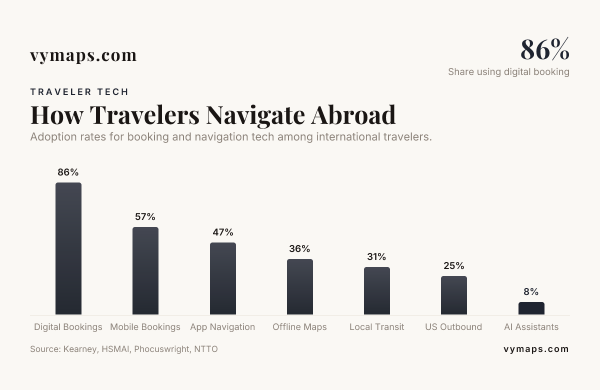
Adoption rates for booking and navigation tech among international travelers.
Start with a “High-Utility Navigation” mindset (not a gadget mindset)
High-Utility Navigation for International Travelers means we design your trip for the real friction points, not the fantasy of perfect signal and instant clarity. You need a plan that survives common problems like delayed trains, confusing entrances, and battery anxiety.
We treat navigation as three separate jobs: finding, moving, and recovering. If you only optimize the finding step, the trip falls apart when plans shift.
Finding: Get the right place and the right entrance, then lock it in as a saved “pin.”
Moving: Use route guidance that matches your pace, accessibility needs, and time constraints.
Recovering: Have a backup route plan and a quick way to restart navigation without losing context.
Build your offline-first foundation for international cities
In 2026, we still see travelers rely too heavily on live data. High-Utility Navigation for International Travelers should start with offline capabilities so you are not stuck when data coverage drops or roaming costs spike.
Here is the setup we recommend before you board:
Download map regions for the places you will actually walk, not only the city center.
Save key places offline: lodging, airport or station, and 2 to 3 “reliable” nearby points.
Confirm transit schedules you care about, then screenshot or save the essentials.
Check battery survival by lowering screen brightness and using power-saving modes.
If you are staying in hotels or short-term accommodation, we find it helps to plan for the arrival moment. A smooth arrival is not “dramatically immersive,” it is simply getting from the correct transport stop to the correct door.

Use route decisions that stay accurate when crowds and delays hit
High-Utility Navigation for International Travelers works best when your choices align with how the trip will feel in the real world. In 2026, more international travelers are competing for the same transit corridors, and crowding changes the “best route” story quickly.
When you set routing preferences, think like this:
If you have a timed reservation, prioritize reliability over theoretical shortest time.
If you are walking a lot, prioritize routes that reduce stairs and dead ends.
If you are transferring, pick routes that minimize the number of wayfinding steps.
Did You Know?
8% is the projected increase in online travel bookings in 2025, reaching a total of $1.07 trillion as digital adoption accelerates.
Source: Phocuswright
This matters because more bookings also means more movement, more traffic on popular routes, and faster expectations for what navigation should do. In practice, your High-Utility Navigation for International Travelers plan should assume that “quick” can become “crowded” sooner than you think.
Pin the right locations, not just the address
When we talk about High-Utility Navigation for International Travelers, we mean precision. Addresses are useful, but they are not always what you need in the field.
Try this pinning method:
Lodging pin: mark the main entrance you will actually use.
Transit pin: save the station entrance you will enter from (not the station name only).
Fallback pin: choose a nearby landmark you can reach if GPS drifts.
This approach reduces the “I’m here, now what?” moment. You also reduce language friction because you can navigate using the same saved points across different days.
Choose navigation tools by the decisions you make, not the features you hear about
Most travelers download whatever is popular, then hope it works. We recommend choosing tools based on the specific decisions you will make while traveling, especially in 2026.
Here is a simple way to match tools to tasks:
Route planning: pick the app you trust for walking transit transfers.
Place details: pick the app that shows hours, entrance info, and nearby context.
Communication: pick the tool you can use quickly for clarifying directions in conversation.
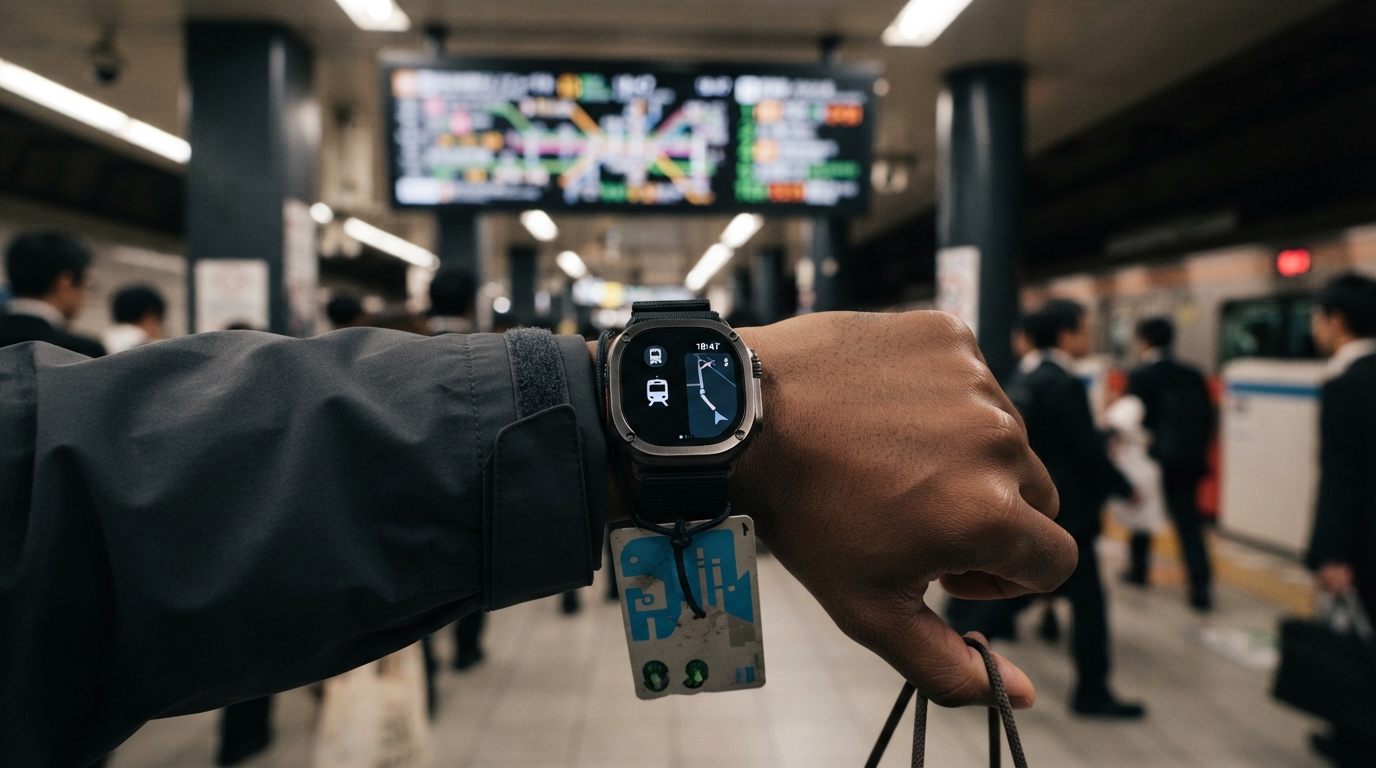
Then practice once before you need it. Walk a short route near your lodging using your chosen navigation flow. If it is easy for a 20-minute walk, it will usually be manageable during longer trips.
Make recovery effortless with backup routes and “restart points”
In international travel, things change. A platform closes. A ride share pickup point moves. Your walking route becomes impractical. High-Utility Navigation for International Travelers should be built for recovery, not only for arrival.
We set recovery up using restart points:
Save a “restart location” near your target, like a transit entrance or main square.
Know a backup mode (for example, switch from walking to transit) if conditions worsen.
Keep a short list of alternate routes you can switch to quickly.
When you do this, delays do not turn into missed meetings. They become a minor reroute.
Did You Know?
Inflation still impacts travel decisions for the next six months, with 57% of travelers reporting it is a continuing factor.
Source: HSMAI
Where High-Utility Navigation meets real travel planning
Navigation does not happen in isolation. In 2026, people plan with more moving parts, including lodging, transport choices, and daily schedules. High-Utility Navigation for International Travelers is strongest when your travel plan supports your navigation plan.
For example:
If you stay in a hotel area with complicated entry, save the closest verified entrance before you arrive.
If you are using public transportation, verify station access and walking time between entrances.
If you want help setting up day plans, compare local options through categories like Travel Agency or Travel Agency.
We do not treat directories as the navigation solution. We treat them as a way to pick consistent starting points, and then we build your High-Utility Navigation for International Travelers setup around those points.
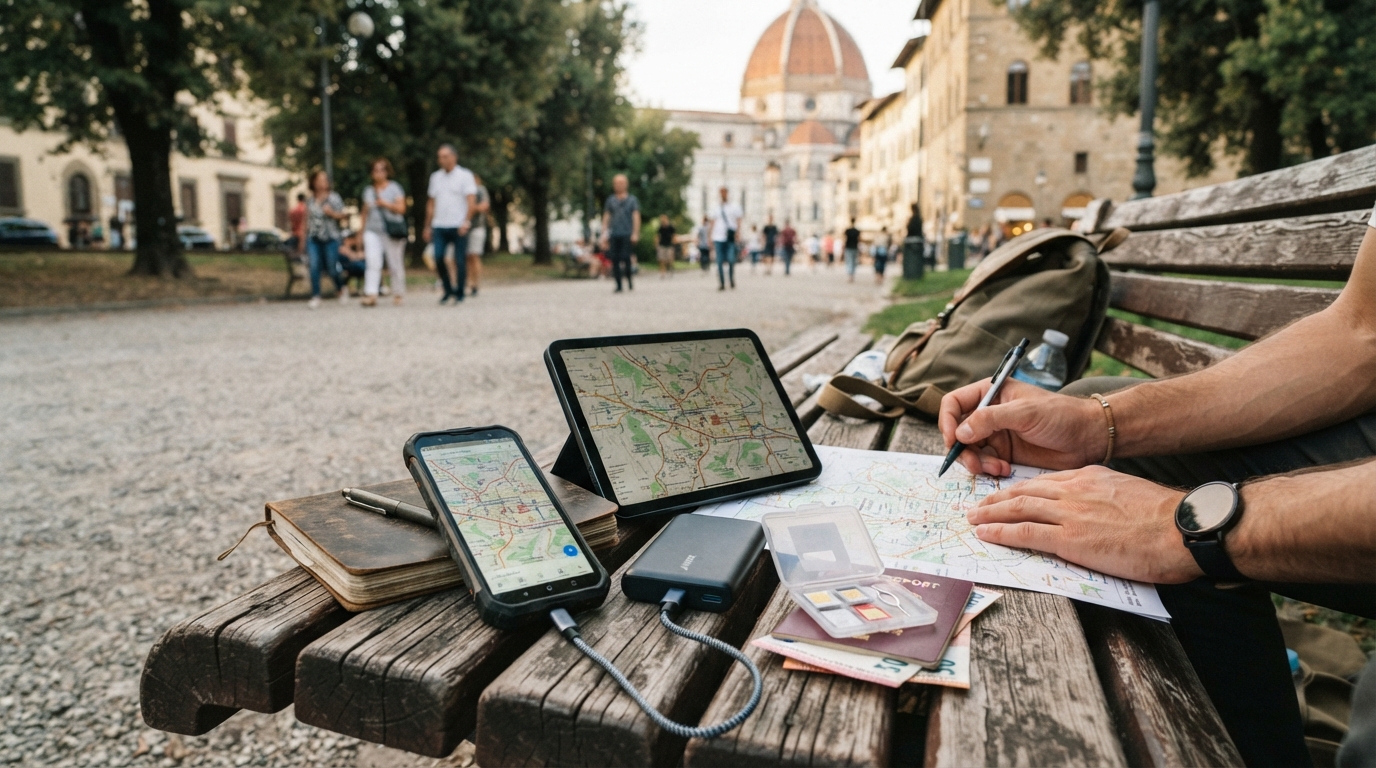
Simple checklist we use before every international trip
When people ask us what “High-Utility Navigation for International Travelers” looks like, this is the checklist we point them to. Short, repeatable, and focused on what prevents wasted time.
Offline: downloaded maps, saved key places, and confirmed you can open them without data.
Pins: lodging entrance, transit entrance, and one fallback landmark.
Routing: chosen one navigation flow for routes and transfers.
Recovery: backup mode and restart points saved.
Timing: extra buffer added when routes are likely to be crowded.
If you complete these steps, navigation becomes less stressful. You stop guessing, and you start moving with confidence.
Conclusion
High-Utility Navigation for International Travelers in 2026 is about practical resilience: offline-first maps, pinned entrances, route choices designed for delays, and recovery plans you can use immediately. We build navigation around the decisions you will actually make, so you spend less time recalculating and more time arriving.
If you keep the mindset simple, your international travel flow stays smooth, even when cities get busy and conditions change.
Frequently Asked Questions
What does High-Utility Navigation for International Travelers mean in 2026?
High-Utility Navigation for International Travelers means we set up navigation to handle real-world friction in 2026, including weak connectivity, crowded routes, and unclear entrances. Instead of relying on perfect live data, we use offline maps, saved restart points, and reliable routing habits.
Should I rely on navigation apps fully when traveling abroad in 2026?
We recommend using navigation apps, but not relying on them blindly. For High-Utility Navigation for International Travelers, you should download offline maps and confirm that saved places and key routes work without data.
How do I avoid getting lost near my hotel when I land in a new country?
For High-Utility Navigation for International Travelers, the fix is to pin the actual entrance you will use and save a nearby fallback landmark. This reduces confusion during the “last 200 meters,” when GPS drift and signage differences are most annoying.
What is the best way to plan backup routes for international travel?
We build recovery using restart points and alternate modes. High-Utility Navigation for International Travelers works best when you have one backup route idea already saved, so you can switch quickly when the primary option fails.
How can I make navigation work when roaming data is expensive?
High-Utility Navigation for International Travelers starts with offline maps and offline place lists, so you can navigate without constant data use. In 2026, this approach also helps you avoid surprise costs when connectivity is inconsistent.
Is it worth using a travel agency in addition to navigation apps?
For some trips, yes, because travel agency planning can lock in starting points like lodging areas and transport schedules. High-Utility Navigation for International Travelers still matters, but agencies can reduce the number of decisions you make under pressure.
About the Author:
 Jopie Liputra is an avid traveler and passionate explorer who loves discovering new places and cultures. When not traveling, Jopie dives deep into travel blogs and official resources to uncover hidden gems and the best things to do in destinations around the world. His articles are a blend of personal experience and meticulous research, perfect for inspiring your next adventure. Connect with Jopie on LinkedIn.
No comments yet. Be the first to add a review.