The 'Open Now' Real-Time Urgency: How to Win Customers in the Moment (2026 Guide)
The "Open Now" Real-Time Urgency: How to Win Customers in the Moment (2026 Guide)
The "Open Now" Real-Time Urgency is not a nice-to-have detail anymore, in 2026 it is the difference between getting noticed and getting passed by, and 64% of consumers now expect real-time responses when they reach out to a company.
Key Takeaways
| What readers want | What to do in 2026 |
|---|---|
| real-time business hours that match reality | Use the "Open Now" label only when it is truly correct for the current moment. |
| open now near me 2026 intent is immediate | Put "Open Now" information where it is visible fast, not buried after clicks. |
| directory accuracy | Treat listings like live systems, update hours when seasons and staffing change. |
| fewer surprises, more conversions | When we show "Open Now," we reduce the chance of a wasted trip. |
| How do customers find us? | We make it easy to browse categories and locations, for example our restaurant listings and store listings. |
- Best practice: Align "Open Now" with real-time business hours, including exceptions and holiday schedules.
- Best practice: Confirm the time window users actually care about, especially around lunch, after work, and weekends.
- Best practice: If we cannot guarantee live accuracy, we avoid risky urgency signals.
- Best practice: Use structured listings across regions like the US, UK, and Canada pages to keep customer expectations consistent.
Quick Q&A people ask about "Open Now" urgency
- Q: Why does "Open Now" matter so much in 2026?
A: Because real-time intent is high, and delays or inaccuracies cause immediate drop-off. - Q: Is real-time business hours worth the operational effort?
A: Yes. Even small mismatches create lost visits and negative experiences, which are hard to recover. - Q: What is "open now near me 2026" really telling us?
A: The customer wants action now, not a future plan.
What "Open Now" Real-Time Urgency actually means to customers
In plain terms, The "Open Now" Real-Time Urgency is the moment someone decides whether we are available today, right now. They are not browsing for fun, they are checking whether they can solve a problem immediately.
That is why real-time business hours show up as a decision shortcut. A correct "Open Now" signal reduces friction, because it tells the customer they can head over, call, or book without guessing.
In 2026, that expectation has tightened. A large share of people expect real-time responses when they reach out, so an "Open Now" label is part of a larger real-time experience. When we get it right, customers move. When we get it wrong, they bounce.
Why urgency signals convert faster in 2026 (and where they fail)
We keep seeing the same behavior pattern. When a listing feels current, the user trusts the next step. When the listing feels outdated, the user assumes the business is too, and they move on.
That is exactly where The "Open Now" Real-Time Urgency either earns us a visit or costs us one. It is not just about showing the word "open," it is about matching what a person experiences when they try to contact or arrive.
Notice what that implies. Even if we are the best option, we can still lose if our timing feels slow or wrong. The "Open Now" label is one part of the speed perception, and it affects how quickly someone takes action.
Common ways urgency backfires
- Outdated hours: the listing says open, but it is not.
- Missing exceptions: holidays, staffing shortages, or early closures.
- Mismatch between channels: the page says open, but the phone goes to voicemail or the door is locked.
- Low-confidence accuracy: customers have seen too many wrong listings, so they hesitate even when it says open.
How we keep open-now near me behavior aligned with real-time business hours
When someone searches open now near me 2026, they are usually trying to solve something simple and fast. They might be looking for dinner tonight, a service before a deadline, or a quick purchase on the way home.
That is why we treat "Open Now" urgency as a consistency problem. We do not want it to feel like a marketing banner. We want it to feel like reliable information.
Practically, that means we focus on the details that drive directory accuracy. If your hours are seasonal, we reflect it. If you have weekly schedule changes, we reflect those too. And if you cannot guarantee accuracy, we avoid overstating urgency.
Checklist we use for real-time business hours readiness
- Verify current operating hours against what your team uses day to day.
- Document exceptions like holidays and one-off closures.
- Confirm time zone correctness so the "Open Now" window matches the customer’s reality.
- Update promptly when staffing shifts, even if it is short-term.
- Keep categories consistent so a user browsing restaurant listings or store listings sees the same expectations.
If you manage multiple locations, the same rules apply, but the impact is bigger. One incorrect "Open Now" label can waste trips and reduce trust for that entire listing.
Directory accuracy beats guesswork, especially for restaurants and stores
Urgency is most powerful when it is easy to verify. For categories like restaurant listings and store listings, customers tend to act quickly, so the window for mistakes is small.
When directory accuracy is strong, we reduce the “try anyway” behavior. People stop guessing and start moving. They plan around what they see.
If you are building a reliable experience, you should make it obvious where customers can browse by type and location. For example, we support browsing across restaurant listings and store listings so customers can match the moment with the right category.
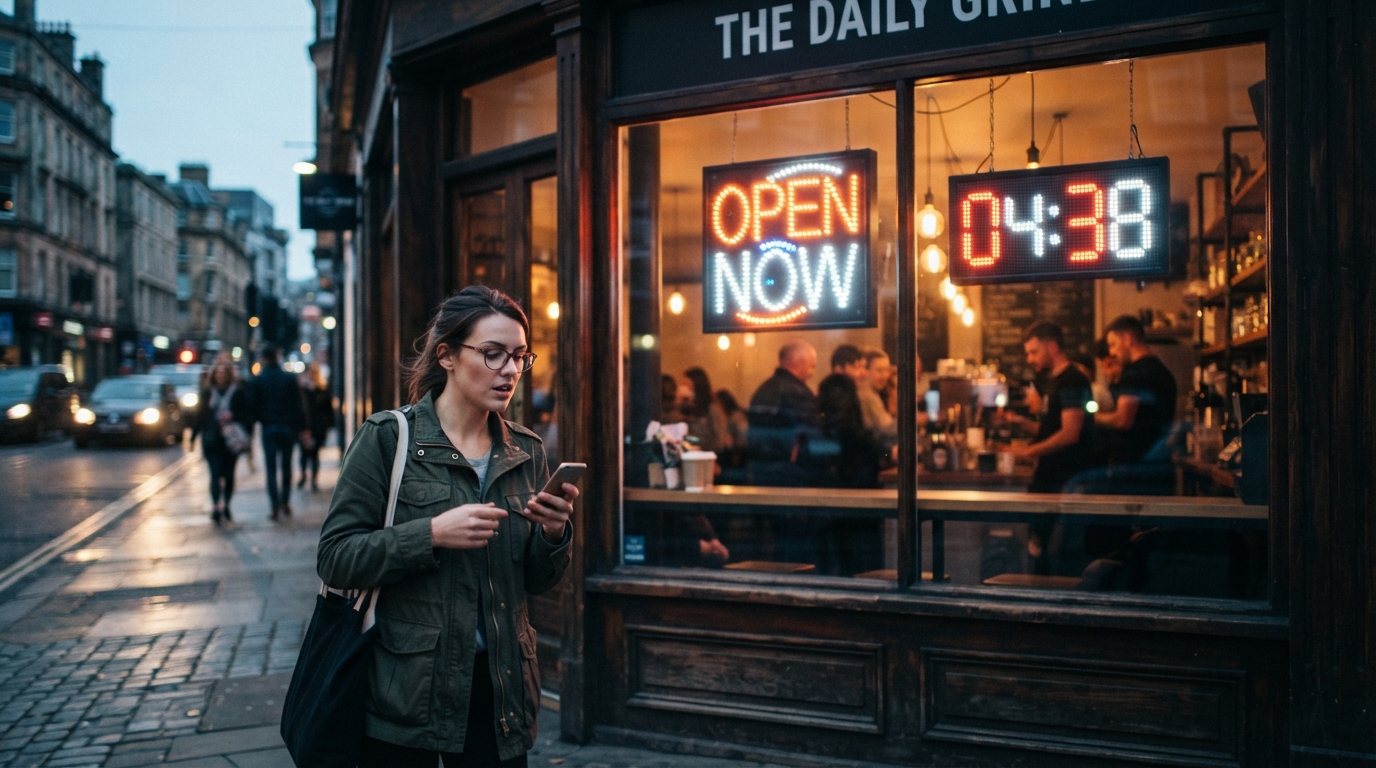
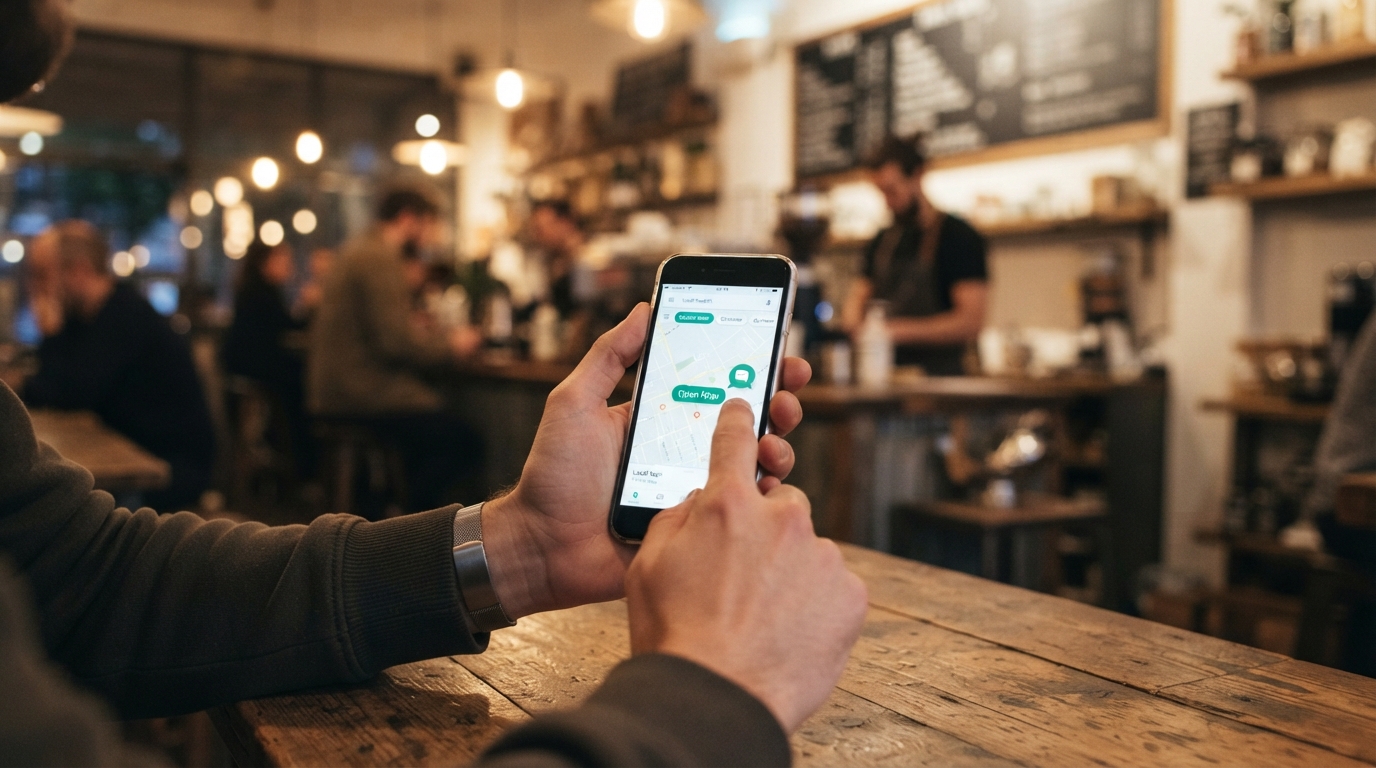
Below, here is an example image to help visualize how users expect listings to feel when they are looking for something that is currently available.
Signals that work together with The "Open Now" Real-Time Urgency
"Open Now" is a strong trigger, but it performs best when the rest of the listing supports it. In 2026, customers are more alert to mismatch, so we pair urgency with details that reduce uncertainty.
- Clear contact path: call, directions, or booking should match the "Open Now" message.
- Consistent updates: we keep hours stable across the places customers check.
- Readable hours layout: people skim when they are in a hurry.
- Local relevance: regional listings should not contradict each other, especially if you operate in multiple areas.
We also use a simple principle. If we say it is open, we make it easy for the customer to act immediately. That reduces wasted trips and supports better outcomes for both sides.
Our rule: The "Open Now" label should be a promise you can keep, not a guess you hope is right.
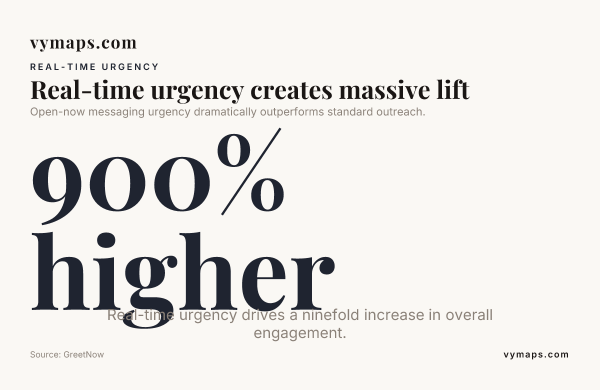
Open-now messaging urgency dramatically outperforms standard outreach.
Measuring the impact of The "Open Now" Real-Time Urgency (without guesswork)
To manage The "Open Now" Real-Time Urgency, we need signals we can monitor. In 2026, speed and accuracy work together, so we track both behavior and outcomes.
We focus on a few measurable areas:
- Click-to-contact speed: how fast people take action after they see "Open Now."
- Visit friction: how often customers report arriving when the business was not actually open.
- Category performance: restaurants and stores may respond differently because the urgency use-case is different.
- Time-of-day patterns: lunch hours, after-work windows, and weekend evenings are often where real-time business hours matter most.
That statistic matters because "Open Now" is a pre-signal. It pulls the user into a fast decision flow, so what happens next needs to be fast too. If a customer sees urgency but experiences delays, trust drops quickly.
Practical “best for” recommendations by scenario
Not every business needs the same approach. Here are the best-fit paths we recommend based on how customers behave in The "Open Now" Real-Time Urgency moments.
Best for quick-need services
- Show real-time business hours clearly.
- Use exceptions consistently so the "Open Now" promise stays true.
- Make the next step fast, call or directions should not be buried.
Best for restaurants
- Keep "Open Now" aligned with service periods, lunch and dinner starts matter.
- Update when kitchen or staffing constraints change, not only on holidays.
- Because customers search “open now near me 2026” for dinner decisions, prioritize accuracy over boldness.
Best for retail stores
- Use "Open Now" as a trust signal, match it to what customers can actually buy today.
- If you have extended hours, confirm them so directory accuracy improves.
- Keep hours in sync across categories and regions.
Conclusion
The "Open Now" Real-Time Urgency is a simple idea with serious impact in 2026. When we keep real-time business hours accurate, we earn trust, reduce wasted trips, and give customers the confidence to act immediately.
If we want the “open now near me 2026” audience to choose us, we need directory accuracy that feels current at the exact moment they check. That is the real advantage, and it starts with an “open” label we can actually stand behind.
Frequently Asked Questions
What does "Open Now" mean for real-time business hours in 2026?
In 2026, The "Open Now" Real-Time Urgency means your listing should reflect whether you are actually operating right now. It is not just a schedule, it is a real-time decision signal that shapes whether people act immediately.
How can I improve directory accuracy for open now near me 2026 users?
We recommend updating hours quickly when staffing, seasons, or exceptions change, because directory accuracy directly affects The "Open Now" Real-Time Urgency trust. If “open” is wrong, customers assume the rest of the information is wrong too.
Why do customers trust the "Open Now" label more than static hours?
Because The "Open Now" Real-Time Urgency matches what the customer is trying to do right now. In 2026, many users expect real-time responses, so the label serves as a fast confidence check.
Is it better to be conservative and not show "Open Now"?
Yes, if we cannot guarantee accuracy. The "Open Now" Real-Time Urgency works when it is a promise, if it becomes a guess it damages trust faster than being cautious helps.
What should restaurants and stores do to keep open-now messaging effective in 2026?
We keep The "Open Now" Real-Time Urgency aligned with real-time business hours and exceptions like holiday closures or short-staffed periods. Then we make the next action fast, so customers can act while urgency is high.
How quickly do customers respond after seeing real-time urgency signals?
Customers often move quickly because The "Open Now" Real-Time Urgency enters them into an immediate decision flow. Data around speed shows large benefits for acting within early windows, so delays after the "open" signal hurt outcomes.
What is the biggest mistake businesses make with “Open Now” in 2026?
The biggest mistake is letting timing drift out of sync with reality. When The "Open Now" Real-Time Urgency does not match actual availability, customers feel misled and stop trying.
About the Author:
 Jopie Liputra is an avid traveler and passionate explorer who loves discovering new places and cultures. When not traveling, Jopie dives deep into travel blogs and official resources to uncover hidden gems and the best things to do in destinations around the world. His articles are a blend of personal experience and meticulous research, perfect for inspiring your next adventure. Connect with Jopie on LinkedIn.
No comments yet. Be the first to add a review.