About
Location :
Added by Jopie, at 26 May 2017
Gallery


Add missing information
7 Reviews
-
20 May 2018
Sri Lanka is well known for its ancient hydraulic civilization and major irrigation works constructed since 3rd century AD. Some of these structures are often quoted as technically parallel to the modern engineering designs and constructions. The ancient Maduru Oya sluice way is one such structure. As its coincidence with vary same site designed for the modem sluice, under recently executed Accelerated Mahaweli Development Project.
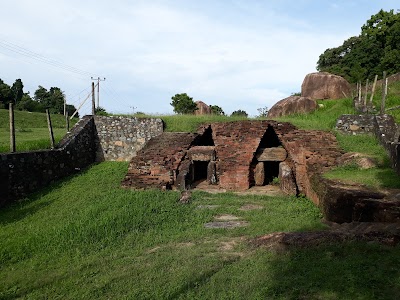
Comparing with the remains of ancient sluices in Sri Lanka. the Maduru Oya ancient sluice possesses some salient features. One such feature is its twin inlet conduits, dressed with stone slabs enclosed in a massive corbelled
arch shaped brickwork. Covering stone slabs with brickwork is a common construction pattern in ancient sluices, but this corbelled arch shaped brick enclosure is only limited to Maduru Oya sluice.
the central pit forms special interest as its right wall has a peculiar terracotta design of dancers. Similar feature has not been located from any other sluice in Sri Lanka.The Maduru Oya Sluice made up of stone slabs and bricks, is about 30 feet (9.1 m) high, 30 feet (9.1 m) wide and 219 feet (67 m) long. Professor Senarath Paranawithana believes that this sluice way was built by King Kutakanna Tissa (42-20 BC). Carbon dating carried out in USA has also placed the time period to 1st century BC. But the popular local belief us that the original dam here was built before the arrival of Vijaya by Yaksha Tribes around 6th century BC.response / report this review -
19 May 2018
Sri Lanka is well known for its ancient hydraulic civilization and major irrigation works constructed since 3rd century AD. Some of these structures are often quoted as technically parallel to the modern engineering designs and constructions. The ancient Maduru Oya sluice way is one such structure. As its coincidence with vary same site designed for the modem sluice, under recently executed Accelerated Mahaweli Development Project.
Comparing with the remains of ancient sluices in Sri Lanka. the Maduru Oya ancient sluice possesses some salient features. One such feature is its twin inlet conduits, dressed with stone slabs enclosed in a massive corbelled
arch shaped brickwork. Covering stone slabs with brickwork is a common construction pattern in ancient sluices, but this corbelled arch shaped brick enclosure is only limited to Maduru Oya sluice.
the central pit forms special interest as its right wall has a peculiar terracotta design of dancers. Similar feature has not been located from any other sluice in Sri Lanka.
The Maduru Oya Sluice made up of stone slabs and bricks, is about 30 feet (9.1 m) high, 30 feet (9.1 m) wide and 219 feet (67 m) long. Professor Senarath Paranawithana believes that this sluice way was built by King Kutakanna Tissa (42-20 BC). Carbon dating carried out in USA has also placed the time period to 1st century BC. But the popular local belief us that the original dam here was built before the arrival of Vijaya by Yaksha Tribes around 6th century BC.
Note:
Access to the Maduru Oya Dam is restricted to the general public. Since the ancient sluice lies in the close to the dam access to this too is restricted. You need to obtain permission from the Mahaweli Authority prior hand which you need to present to the Army checkpoint.response / report this review -
26 February 2018
Right side Omunagala rock.
response / report this review -
18 February 2018
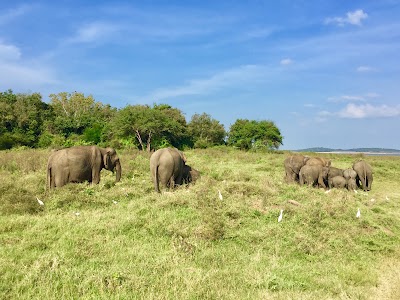
Maduru Oya National Park is a national park of Sri Lanka, established under the Mahaweli development project and also acts as a catchment of the Maduru Oya Reservoir. The park was designated on 9 November 1983. Providing a sanctuary to wildlife, especially for elephants and protecting the immediate catchments of five reservoirs are the importance of the park. A community of Vedda people, the indigenous ethnic group of Sri Lanka lives within the park boundary in Henanigala. The park is situated 288 kilometres (179 mi) north-east of Colombo.
response / report this review -
19 January 2018
Ancient Maduru Oya Sluice dating back to 1st century BC.
An ancient sluice dating prior to the 6th century BC was discovered recently on the old breached earthen bund of the Maduru Oya.response / report this review -
15 December 2017
A must see!
The ancient sluice gate emerged when arrangements were made to construct a new sluice gate in 1981 for the southern bank of Maduruoya reservoir.The king who wad responsible for the construction is unknown.According to the greater chronicle king Mahasen ( 273 AC) built the Mahadaragalla tank.King Vijayabahu ( 1055-1110 AC) and the king Parakaramabahu(1153-1186) effected repairs respectively.
As the time passed by this tank came to be known as Mahadara and further to Madara and subsequently Maduru being the first century B.C .
The land between Mahaweli river and Maduruoya was identified as Antaragaga.This name is found in the greater chronicle too.
The research conducted by professor Senarath Paranawithana was of the opinion that Antaragaga was built by the king Kuttakannatissa(44-22 B.C).
US study from the data collected from the site dates back this sluice gate to the first centuryB.C.
According to a popular belief the Yakshas lived prior to the arrival of king Vijaya(6 th century B.C) intimated the original design of this sluice gate
Photos of the ancient sluice gate ,location in the map and surrounding are in photos.
You have to obtain permission from the Dam guards and be extra careful with electric fence which is around the gate to keep elephants away!response / report this review -
02 June 2017
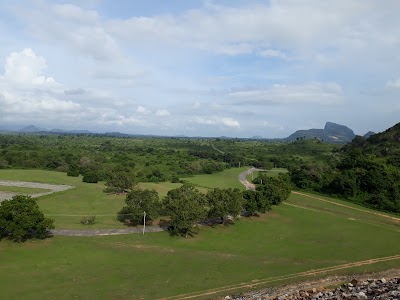
Sluice of the original weir linking two mountains.
response / report this review