Best Practices for Industry-Specific Listing Optimization in 2026

Industry-Specific Listing Optimization is no longer optional, and the data makes that clear. Businesses that maintain consistent profiles across both general platforms and niche directories see up to 42% higher conversion rates, which shows how much industry context matters in 2026.
Key Takeaways
| Topic | Insight |
|---|---|
| What is Industry-Specific Listing Optimization? | It means tailoring your business listings to platforms and categories that match your industry, not just general directories. |
| Why optimize Google My Business? | A complete profile builds trust and drives real visits, especially when combined with niche listings. |
| Best industries for optimization | Restaurants, hotels, healthcare, legal services, and retail benefit the most from targeted directory placement. |
| Common mistakes | Inconsistent business details, missing categories, and ignoring reviews across platforms. |
| Tools to use | Platforms like Yext Listings and Native Rank listing management help manage multiple directories efficiently. |
| Where to list your business | Start with VyMaps and expand into industry categories like retail listings or hospitality directories. |
What Is Industry-Specific Listing Optimization and Why It Matters
Industry-Specific Listing Optimization means we do not treat every business listing the same. A hotel, a restaurant, and a law firm all require different categories, attributes, and platforms.
General directories still matter, but niche platforms often drive higher intent users. That is why combining google my business optimization with targeted directory placement creates stronger results.
Best for Restaurants: Industry-Specific Listing Optimization That Drives Foot Traffic
Restaurants rely heavily on accurate categories, menus, and reviews. A basic listing is not enough when users expect real-time details.
We focus on placing restaurants in both general and niche directories like restaurant business listings and food services directories, ensuring menu updates and opening hours stay consistent.
- Use detailed menu sections and photos
- Highlight delivery and takeaway options
- Encourage frequent review updates

Best for Hotels and Accommodation: Industry-Specific Listing Optimization for Bookings
Hotels and accommodation providers benefit from detailed listing attributes like amenities, room types, and booking integrations.
We recommend listing across platforms like hotel directories and accommodation listings to capture different traveler intents.
Industry data in 2026 shows that specialized travel platforms still outperform general listings for booking decisions.
Best for Retail Businesses: Industry-Specific Listing Optimization for Product Discovery
Retail listings should focus on product availability, store hours, and location accuracy. Shoppers expect to see what is in stock before they visit.
We use platforms like retail business directories to connect physical stores with local demand.
- Add product categories and highlights
- Keep inventory-related info updated
- Use images that reflect actual store offerings
Industry-Specific Listing Optimization for Healthcare and Legal Services
Healthcare and legal sectors rely on trust and authority. Listings must include certifications, specialties, and verified reviews.
In 2026, platforms like Healthgrades and Avvo dominate their respective industries, which shows that google my business for seo alone is not enough.
- Include credentials and licenses
- Highlight specialties and services
- Maintain consistent contact details across all directories

How to Optimize Google My Business Alongside Industry Listings
We treat google my business optimisation as the foundation, not the full strategy. It works best when combined with industry-specific listing optimization.
Key steps include:
- Complete every section of your profile
- Use accurate categories and services
- Keep hours and contact details updated
- Respond to reviews consistently
This combined approach ensures visibility across both general and niche platforms.
Best Tools for Industry-Specific Listing Optimization in 2026
Managing multiple listings manually is not practical, especially for multi-location businesses.
We recommend tools that centralize updates and maintain consistency across platforms:
- Yext Listings for automated updates across directories
- Native Rank for location-based listing management
- Directory aggregators like MyPresences VyMaps directory profile
Common Mistakes in Industry-Specific Listing Optimization
Many businesses still treat listings as a one-time setup. That approach leads to outdated and inconsistent information.
- Using incorrect categories for the industry
- Ignoring niche directories
- Allowing outdated contact details to remain live
- Not responding to customer reviews
Consistency across platforms is what builds trust and drives action.

Cost Breakdown and ROI of Industry-Specific Listing Optimization
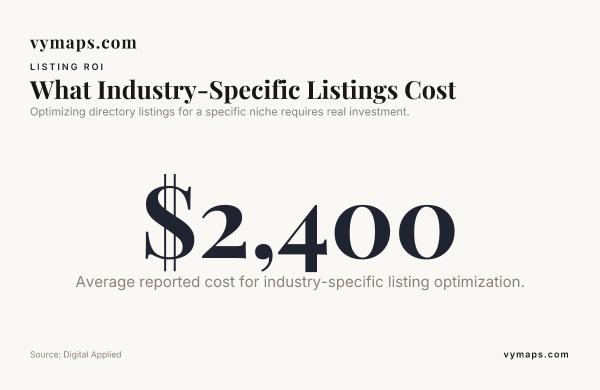
Optimizing directory listings for a specific niche requires real investment.
Industry-Specific Listing Optimization requires time and budget, but the return is measurable. Businesses that invest in accurate listings often see increased calls, visits, and conversions.
When combined with google my business optimization services, the financial impact becomes even clearer, especially for service-based businesses.
Conclusion
Industry-Specific Listing Optimization is one of the most practical ways to improve visibility and trust in 2026. Businesses that combine google my business optimisation with targeted industry directories consistently outperform those that rely on a single platform.
We recommend focusing on accuracy, consistency, and industry relevance to get the best results from your listings.
Frequently Asked Questions
What is Industry-Specific Listing Optimization in simple terms?
Industry-Specific Listing Optimization means tailoring your business profiles to directories and platforms that match your industry, rather than relying only on general listings.
Is Google My Business enough for local visibility in 2026?
No, google my business for seo works best when combined with industry-specific listing optimization across niche directories.
How do I optimize Google My Business effectively?
To optimize google my business, complete all profile sections, use accurate categories, update hours regularly, and respond to reviews.
What industries benefit most from listing optimization?
Restaurants, hotels, healthcare providers, legal services, and retail businesses benefit the most from industry-specific listing optimization.
Are listing management tools worth it?
Yes, tools like Yext and Native Rank simplify industry-specific listing optimization by keeping information consistent across multiple platforms.
How often should I update my listings?
You should review and update your listings at least monthly to maintain accuracy and maximize results from industry-specific listing optimization.
Does listing accuracy really impact customer decisions?
Yes, incorrect or outdated information can cause customers to avoid your business entirely, making accuracy critical in industry-specific listing optimization.
About the Author:
 Jopie Liputra is an avid traveler and passionate explorer who loves discovering new places and cultures. When not traveling, Jopie dives deep into travel blogs and official resources to uncover hidden gems and the best things to do in destinations around the world. His articles are a blend of personal experience and meticulous research, perfect for inspiring your next adventure. Connect with Jopie on LinkedIn.
No comments yet. Be the first to add a review.