About
Location :
Added by Jopie, at 01 May 2016
Gallery


Add missing information
11 Reviews
-
12 May 2018
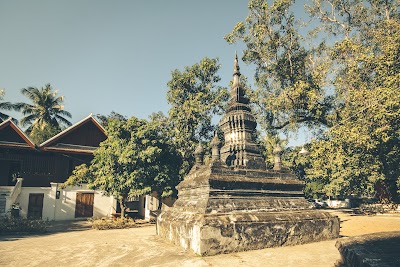
The Wat Aham is a small temple of two ancient stupas. It has a history of Buddhism and spiritual worship. The temple was built in 1818 on the site of a much older temple dating back to 1527.
response / report this review -
12 May 2018
small temple and Vat Visounnarath as adjacency.
response / report this review -
29 October 2017
History, tradition, cult and country
response / report this review -
10 October 2017
It’s easy to get temple fatigue in Luang Prabang as the city is dotted with beautiful but a bit repetitive Buddhist temples. This one can very well be one of those temples but it does boast a long and colorful history.
response / report this review -
01 August 2017
Next to another temple so worth for a 2 for 1 visit
response / report this review -
23 July 2017
No information anywhere
response / report this review -
01 April 2017
Chùa đẹp
response / report this review -
24 January 2017
樹木がいっぱいで癒される空間
response / report this review -
02 January 2017
Small temple with 1 main building, few monk room, 2 stupa. Main building are closed during my visited, wonder this temple are open to public.
response / report this review -
09 December 2016
Le Vat Aham (1822)(Nom : Monastère du Cœur épanouï / de la Félicité)
Ce fut l'ancienne résidence du patriarche suprême Sangkhalat. L'intérieur du temple est décoré de fresques représentant la vie de Bouddha et le Ramayana.
Ce temple fut certainement construit au début du 19ème siècle et semblait servir notamment à la médiation et aux réunions entre le culte des esprits et la pratique Bouddhiste. Avoisinant le Vat Visounnarat, il est relativement calme alors même que le quartier devient depuis quelques années le siège de la vie nocturne de Luang Phabang.
On remarquera 2 tigres stylisés gardant la pagode, et les statues des gardiens Ravana et Hanuman (figures centrales du Ramayana indien épique et de ses contre-parties lao, le Phalak Phalam) se tenant aux coins méridionaux et orientaux du porche frontal. À la différence d’un certain nombre d’autres pagodes de Luang Phabang, il n’y a aucune décoration externe sur les murs du porche.
On remarquera également le nombre de supas et les 2 "Bhodi" (banyan ou Bo), ces arbres qui abritent le protecteur de l’esprit royal, le Haw Phi Khon.
Durant la plus grande partie du 19ème siècle, et avant que le Vat Mai ne lui succède, le Vat Aham servait de résidence au Sangkhalat, le Patriarche Suprême du Bouddhisme ; et dans le même temps, il était considéré comme le centre du culte des gardiens de Luang Phabang, les esprits Devata Luang : Phou Gneu et Gna gneu dont les masques et les danses sont toujours présents lors de cérémonies notamment à l’occasion du Nouvel An Lao.
L’arche de passage vers le Vat Visounnarat est la plus ancienne de la ville.
Wat Aham (1822) (Name: Monastery of the flourished heart / Bliss)
It was the former residence of the Supreme Patriarch Sangkhalat. The interior of the temple is decorated with frescoes depicting the life of Buddha and Ramayana.
This temple was probably built in the early 19th century and appeared to be used in particular to mediation and meetings between the worship of spirits and Buddhist practice. Wat Visounnarat nearby, it is relatively quiet even as the neighborhood becomes the last few years the seat of the nightlife of Luang Phabang.
Note 2 stylized tigers guarding the pagoda and statues of Ravana and Hanuman guards (central figures of the Indian epic Ramayana and its cons-parts PDR, Phalak Phalam) holding on to the southern and eastern parts of the front porch. Unlike a number of other pagodas in Luang Phabang, there is no external decoration on the walls of the porch.
Note also the number of supas and 2 "Bhodi" (banyan or Bo), the trees that shelter the protector of the royal mind, Haw Phi Khon.
During most of the 19th century, and before the Wat Mai will succeed him, the Wat Aham served as the residence Sangkhalat, the Supreme Patriarch of Buddhism; and at the same time, he was regarded as the center of worship of the guardians of Luang Phabang, the spirits Devata Luang: Phou Gna Gneu Gneu and whose masks and dances are always present at ceremonies including the New Year Lao.
The passage to the Vat Visounnarat arch is the oldest of the city.response / report this review -
08 May 2016
Enterance fee will be charged once you already inside 20000 kip.. no infos of that at the main gate.
response / report this review