About
Location :
Added by Jopie, at 05 November 2013
Opening Hours
- Monday 9:00 AM – 6:00 PM
- Tuesday 9:00 AM – 6:00 PM
- Wednesday 9:00 AM – 6:00 PM
- Thursday 9:00 AM – 6:00 PM
- Friday 9:00 AM – 6:00 PM
- Saturday Closed
- Sunday Closed
Gallery




Add missing information
13 Reviews
-
12 May 2018
You can see currency notes and coins💰💴
response / report this review -
27 April 2018
Offers good service
response / report this review -
07 March 2018
The museum is maintained and taken care by the communication department of the Central Bank of Sri Lanka.You can see the coins and currency from ancient times till now. The ancient artifacts and paintings from the well known and renowned painters are also available there.
response / report this review -
28 January 2018
Contains the history of Sri Lankan rupee.And other currencies im the world.How notes arw printed.
response / report this review -
11 October 2017
CBSL currency museum is the best collection of coins and currency fro ancient medieval Sri Lanka, various Sri Lankan kingdoms and Colonial times. it also displays the all coins and currency notes issued since the establishment of CBSL under British rule.
This is a hidden gen in the heart of the city due to apparent lack of publicity and restriction that was there during internal conflict which ended in 2009.
Its free and open to public from 9 am to 5 pm on weekdays and 9 -12 pm on Saturdayresponse / report this review -
26 September 2017
They renovated the place and turned into a museum. You can buy comommorative coins and central bank reports from the counter. The staff surprisingly friendly and explains all the history.
response / report this review -
02 August 2017
Very good currency museum of Ceylon / Sri Lanka
response / report this review -
09 June 2017
This museum is maintained by the Central Bank of Sri Lanka and it gives a vast opportunity for everyone to learn about history of the money system of Sri Lanka. It has a great collection of historic icons which depicts the gradual development of money system.
All CBSL publications are available for sale.response / report this review -
30 April 2017
Nothing much to see. But the collection of ancient coins is very impressive.
response / report this review -
23 January 2017
Good place to find out about the monetary history of Sri Lanka. Free entry and most commemorative coins are available for sale
response / report this review -
07 December 2016
Central bank owned building, renovated by defence ministry in year 2014. This was a abondened building for many years. Pension department was operated here many years back.
response / report this review -
27 February 2016
This museum is maintained by the Central Bank of Sri Lanka and it gives a vast opportunity for everyone to learn about history of the money system of Sri Lanka. It has a great collection of historic icons which depicts the gradual development of money system.
response / report this review -
12 November 2013
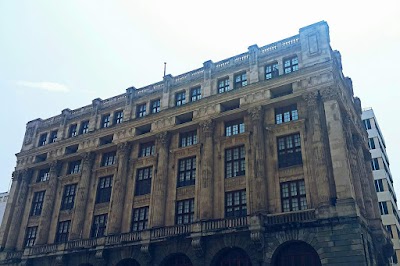
THE CENTRAL POINT BUILDING
The Central Point building, with its stately Corinthian columns, large window panels, circular glass dome, and marble cladded interior, which continues to add lustre and charm to the landscape of Colombo.
This picturesque building was designed by Walker and Adams, Architects and construction was done by the Ralph McDonald Company.
It was opened in 1914, as the branch office of the National Mutual Life Association of Australasia Limited, an Insurance company based in Australia.
It was considered the tallest building in Colombo in 1914, and in the decade following. Today, it would undoubtedly be a construction that many historians would find of immense interest and value, as it exhibits a blend of cultures, traditions, lifestyles, customs, livelihood activities and architecture took place within the bustling coastal city.
In 1973, the Cooperative Wholesale Establishment of Sri Lanka (CWE) acquired this building from the National Mutual Life Association of Australasia Ltd.
In 1996, its interior was very badly impaired as a result of the massive terrorist bomb blast that occurred at the Central Bank premises, and had been in a highly dilapidated state until 2011, at which time the Central Bank acquired it from the CWE.
Immediately thereafter, the Central Bank started the restoration of the building, making every possible endeavour to preserve the architectural and archaeological value of the property, while also giving it the name “The Central Point Building”, as it is known today. The new name suits agreeably, as the building is located opposite the historic Clock Tower of Colombo, which is considered the “Central Point" of the island's road network.
As a tribute to the architectural, archaeological and economic importance of this historic building, the Central Bank has established the first ever “Economic History Museum of Sri Lanka” at this celebrated landmark.
- Communications Department, Central Bank of Sri Lankaresponse / report this review