About
Location :
Added by Jopie, at 16 August 2016
Gallery




Add missing information
2 Reviews
-
13 October 2017
Die alte, verfallene Kirche wurde in den letztenn Jahren aufwendig renoviert und zu einem Kulturzentrum ausgebaut.
response / report this review -
23 August 2016
.
Well, it hasn't been a church since 1936 . . . and even restored there's little to see. Good lavatories, though!
Almost totally destroyed in the Spanish Civil War, this was left with just the outside walls and the bell tower standing.
The tower was, as in many Andalusian villages, based on the pre-existing minaret from the mosque that had stood here for centuries. Don't let's forget that there was Muslim rule here for 700 years, and Casares, which was re-conquered by the Christian armies in 1491, was one of the last towns/villages to lose its Muslim masters.
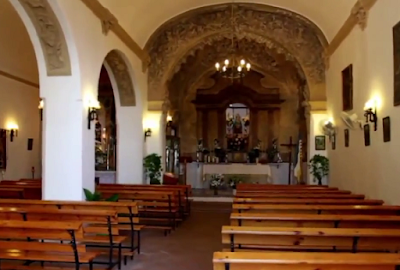
From 1936 until 2005, the church was in ruins. At that point money was available to restore it (the roof is made of copper - no tiles) and turn it into a cultural centre and town museum.
The opening hours are roughly (well, this is Andalucia) Tues-Friday 10.30 - 14.30, and Saturday 16.30 - 18.30.
There is not much to see. A central hall set out as a theatre, where they have concerts plus children's film shows. Two lateral areas with big information panels about the writers/artists of the 27 Generation. You've probably only heard of Lorca, and possibly also Maria Zambrano - and her only because they named the railway station in Malaga after her!
There is a tiny museum with hardly any old stones and objects from roman and muslim times - the best stuff from Casares was carted off to the museum in Malaga, you see.
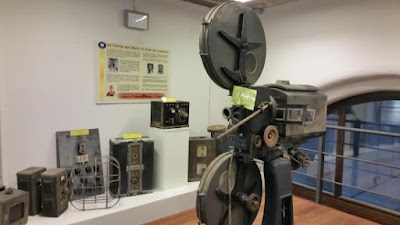
Upstairs there is an old cine projector, and a room with old agricultural implements. Some are authentic, others miniature models made by a local gentleman. This is quite interesting, and unusually in a local museum, there are explanations in readable English. The museums in Estepona, 20 minutes away, especially the one by the bullring, are ten times better, I'm afraid. I do suggest that you go there.
At the very top of the building there are two Miradores - viewing terraces. Ask for the doors to be unlocked if necessary. Superb views in both directions from here.
And the best bit of the Centro Cultural is the lavatories - modern and spotless. The door immediately on your right as you come in.
.response / report this review