About
Location :
Added by Jopie, at 24 July 2016
Opening Hours
- Monday 10:00 AM – 7:00 PM
- Tuesday 10:00 AM – 7:00 PM
- Wednesday 10:00 AM – 7:00 PM
- Thursday 10:00 AM – 7:00 PM
- Friday 10:00 AM – 7:00 PM
- Saturday 10:00 AM – 7:00 PM
- Sunday 10:00 AM – 7:00 PM
Gallery



Add missing information
13 Reviews
-
27 May 2018
Great for kids but not much to see
response / report this review -
02 March 2018
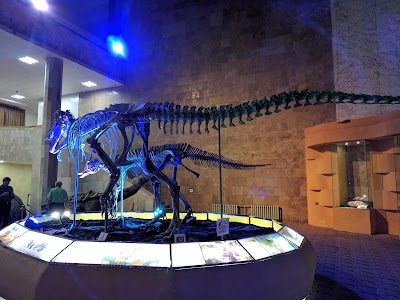
Mongolia has always proven to be a biodiverse nation, especially during its prehistory. The country is especially famous for its dinosaur fossils, belonging to an enormous variety of species that once roamed the plains for million of years. This is a great place, if not, THE perfect place, to travel back in time to witness the beasts that once roamed the Mongolian steppes.
Examples:
Protoceratops andrewsi: A distant ancestor of Triceratops. This was a small herbivorous species that traveled in herds throughout the Gobi Desert.
Velociraptor mongoliensis: One of the most famous species ever known, famed for its appearances in the Jurassic Park series (Although the depiction in the films is inaccurate, since Velociraptors were feathered, and were less than half the size of an adult human. The real species that resembles the raptors in the films in both size and ferocity is the American Deinonychus of the Early Cretaceous Period). This was one of the most fearsome predators of the plains, bearing a sickle claw on its feet specifically functioned for disemboweling its prey.
Therizinosaurus cheloniformis: A bizarre herbivorous species famed for its extraordinarily longs arms, and, more iconically, formidable claws, which were once believed to be the ribs of a giant turtle species, hence the species name "cheloniformis."
Oviraptor philoceratops: An unusual omnivorous species, Oviraptors are recognized for the large eggs that females laid. When first found, they were believed to be the eggs of Protoceratops that were stolen, hence the name "Oviraptor," meaning "egg thief." However, it was later discovered to be their own eggs, later depicting them as a species of good parenting skills.
Tarchia kielanae: A large tank-like herbivore specifically armored to defend itself from the dangerous predators that prowled the land. The club at the tip of its tail delivered a deadly blow that was sure to brutally cripple any carnivore that dared to attack it.
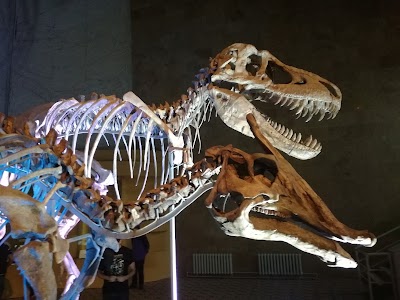
Tarbosaurus bataar: While its American counterpart, the Tyrannosaurus rex, roamed the forests and plains of North America, the Tarbosaurus bataar took its place as the top predator of Asia. This fearsome predator was the largest of its kind, roaming the vast plains in search of potential prey.response / report this review -
10 February 2018
Smaller museum, but good displays. Needs better lighting.
response / report this review -
31 October 2017
If you want see the remains of dinosaurs. Then visit this place. You can enjoy.
response / report this review -
10 October 2017
Very small, only two rooms. A few good pieces, but mostly disappointing. Don't expect spending more than 20 minutes (and I'm usually very long in museums).
response / report this review -
13 July 2017
This place couldn't be a bigger pile of dino dung. I was so excited to see this place and was so let down, there are a total of 5 piles of bone. Mostly either fake looking, or un covered from the hunk of soil they were buried in. Save your money and go to the national museum where they have hours of information on Mongolia with thousands of artifacts.
response / report this review -
06 July 2017
Hidden gem. A small but interesting collection of dinosours skeletons. Interesting history behind Mongolia getting that fossils back from American expeditions. There are plans to make the museum even bigger.
response / report this review -
18 June 2017
Entry fee required, adult 3000, student 1000. You are not allowed to take photos -sigh- unless you pay 30000
response / report this review -
30 October 2016
The smallest muzeum I have ever been to, nonetheless probably the best dinosaurs one. Spent like 30 min there
response / report this review -
30 October 2016
Very nice place, you can see dinosaur skeletons , fossils and also dinosaurs eggs, however it is quite small.
response / report this review -
28 October 2016
Good but too small. Best thing is the Tabrosaur skeleton.
response / report this review -
31 August 2016
Very small but if you need to kill 30 mins and want to learn something about dinosaur bones, this place has you covered. The displays have English and are well done. It is just very small so be prepared.
response / report this review -
31 July 2016
Cool museum, albeit small. The guy at the front first said 2000 tögrög (even the ticket says 2000) but refused to let me in unless I paid 3000. I paid the extra 1000 tögrög finally just to get the guy to quit hassling me.
response / report this review