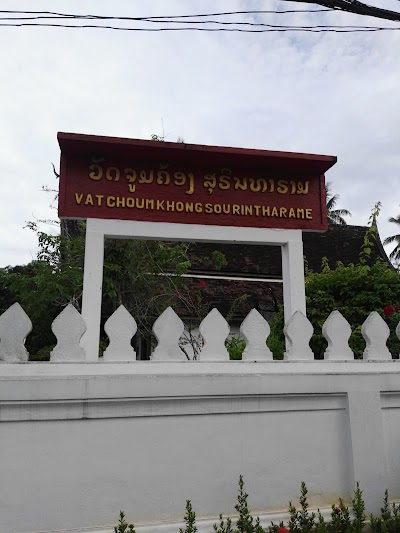
About
Location :
Added by Jopie, at 13 November 2012
Gallery






Add missing information
14 Reviews
-
12 May 2018
this is one of most important temple for Local LPB people,
there has some historical stories related to this place.
to enhance the enjoyment of visiting, preparing data might be required or local experienced guide narrative also very helpful.response / report this review -
27 April 2018
I often visit this temple (VAT)
response / report this review -
21 January 2018
One of the oldest temple in LuangPrabang (even was destroyed and rebuilt)
response / report this review -
28 December 2017
A must do if you are doing a temple tour.
response / report this review -
10 October 2017
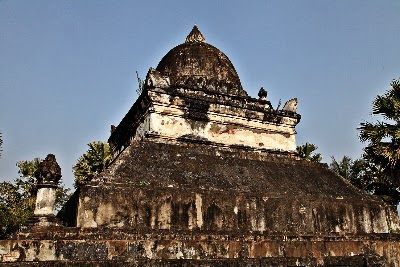
It stands out for its Sinhalese-style stupa in the shape of a watermelon. There’s not many of these in the city. It is also the oldest temple in the city. Definitely a must-visit for history and architecture buffs.
response / report this review -
12 August 2017
Friendly and colourfull temple, with good "comics" inside. Watch the pictures and you understand what I mean.
response / report this review -
01 August 2017
Big temple, if you go in the afternoon all the monks are out doing chores and it's pretty interesting to see
response / report this review -
23 July 2017
Entrance fee inside the main hall is 20000 kip. Free outside.
response / report this review -
26 May 2017
Surprisingly this temple is not crowd with tourists. An old temple with a rich history.
response / report this review -
24 January 2017
境内は無料、本堂の黄金ブッダを見る場所は、20000kip
response / report this review -
09 December 2016
Le Vat Visounnarat & le That Makmo.
Construit en 1513 le Vat Visounnarat serait l'un des temples les plus anciens de Luang Phabang s'il n'avait été entièrement brûlé par les troupes du Pavillon Noir (Hos). Aujourd'hui le temple est reconstruit, mais ne ressemble guère à l'original, car l'ancien devait être entièrement en bois. Le temple conserve encore une très belle collection de Bouddhas de toutes les époques. Dans l'enceinte du temple se dresse un imposant stupa, le that Pathum, plus communément appelé That Makmo (" stupa pastèque ") en raison de sa forme ronde. Il fut reconstruit en 1895 après avoir été détruit et pillé par les Hos qui trouvèrent en son sein des petits bouddhas en métaux précieux.
Le Vat Visounnarat (1503 et complètement refait en 1898)(Nom : Le monastère de l’éclair du roi Vixun)
Particularités :
- Il s’agit d’un temple-musée.
- Le Phabang y resta de 1513 à 1707.
- Aspect simple avec un toit à 2 niveaux.
- Fenêtres à balustres de style khmer.
- Dans son enceinte, on trouve un arbre Bo dont la souche provient de Ceylan (1939).
- A son entrée, un pilier des éléphants est parfaitement conservé.
Le That Makmo (1504 et rénové en 1898)(Nom : Le stupa du Vénérable Lotus. Son surnom est le stupa de la pastèque)
Particularités :
- Il fait 35m de haut.
- Les petits stupas, à sa base, représentent les 4 points cardinaux et les 4 éléments.
- Le style est clairement d’influence cinghalaise.
- Il est construit sur l’ancien emplacement d’un étang.
Wat Visounnarat & That Makmo.
Built in 1513 Wat Visounnarat would be one of the oldest temples of Luang Phabang if he had been burned by the troops of Black Flag (Hos). Today the temple is rebuilt, but bears little resemblance to the original, because the former was to be entirely of wood. The temple still retains a great collection of Buddhas of all times. Inside the temple stands an imposing stupa, Pathum that, more commonly referred That Makmo ("watermelon stupa") because of its round shape. It was rebuilt in 1895 after being destroyed and looted by the Hos who found in it small Buddhas in precious metals.
Wat Visounnarat (1503 and completely rebuilt in 1898) (Name: The monastery of lightning King Vixun)
Special features:
- This is a temple museum.
- The Phabang remained there from 1513-1707.
- Simple appearance with a roof with 2 levels.
- Windows balusters Khmer style.
- In its enclosure, there is a Bo tree, the strain comes from Ceylon (1939).
- On entry, a pillar of elephants is perfectly preserved.
The That Makmo (1504 and renovated in 1898) (Name. The stupa of Venerable Lotus His nickname is the watermelon stupa)
Special features:
- It is 35m high.
- Smaller stupas, at its base, representing the four cardinal points and the four elements.
- The style is clearly influenced by Singhalese.
- It is built on the former site of a pond.response / report this review -
22 July 2016
Statues 're everywhere. Thousand of them. Bigs and tinies.
response / report this review -
25 October 2015
วัดนี้เข้าฟรีแต่โบสถเสียเงินจร้า
response / report this review -
20 November 2012
watermeron
response / report this review