Qasr al-Kharaneh
Amman GovernorateAbout
Location :
Added by Jopie, at 05 January 2014
Opening Hours
- Monday Closed
- Tuesday Closed
- Wednesday Closed
- Thursday Open 24 hours
- Friday Closed
- Saturday Closed
- Sunday Open 24 hours
Gallery




Add missing information
12 Reviews
-
26 April 2018
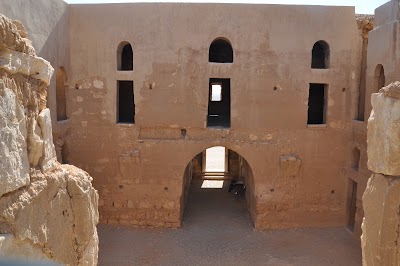
Well preserved desert "fort" with circular towers (thus the name). Probably actually an inn, which would make it the oldest example of an Islamic/abbayad inn. Two stories and you can walk around both of them.
response / report this review -
01 March 2018
Cool place for astrophotography
response / report this review -
01 March 2018
Interesting and surprisingly well preserved.
response / report this review -
05 October 2017
It's one of the Umayyad palaces built in the 8th century in the eastern Jordanian desert as a Caravan syrai, square shape, 36 meters on each side, 2 stories and 67 rooms.
If you have an extra time in Jordan I advise to visit the castle, only if you have extra time, I would put it on the top of the list.response / report this review -
19 August 2017
must visit if you are in the eastern Jordanian desert..
response / report this review -
30 April 2017
The Desert Castles, some 60 km East of Amman, include Qasr Kharana, Qasr Amra and the Al-Azraq Castle. Although we call them castles, they used to be shelters for caravans, caravanserai, and merchants. Each of the castles is different; Qasr Kharana feels somehow lonely, Qasr Amra walls and ceiling are covered with exquisite frescoes, Al Azraq Castle, the biggest of the three, is a true fortress, built of black basalt, and used to be the desert headquarters of Lawrence of Arabia during the Great Arab Revolt. Start your day at Qasr Kharana, don't miss the small Qasr Amra, end your tour in Al Azrag and stay one more day to visit the Wetland Reserve (check its review and go before it's too late . the ecosystem is highly endangered.)
response / report this review -
22 April 2017
Deserve to visit
response / report this review -
11 March 2017
Nice place
response / report this review -
13 February 2017
One of the better and more complete castles. There wasn't a huge amount of information but it's a very complete and impressive building that you can easily spend an hour touring around. Easily accessible too.
response / report this review -
24 January 2017
Could use some attention
response / report this review -
05 October 2016
This castle is one that is easily accessible if you take the 'desert castles' circular drive out of Amman, and is one of the best I think. It is an imposing site with surprises inside like well preserved mosaics. Worth the drive for sure.
response / report this review -
12 January 2014
Visited on the 8th October 1980 whilst travelling overland in my Landrover from the Sultanate of Oman to the UK accompanied by girlfriend Dawn Havey. Qasr Kharana very remote but in remarkable condition, built circa AD 711.
response / report this review