About
Location :
Added by Jopie, at 09 December 2014
Gallery


Add missing information
8 Reviews
-
23 October 2017
That is a wonderful place!Agios Spiridonos!Greece is Orthodox county.We are orthodox brother.Woth live from Russia!
response / report this review -
30 September 2017
Beautiful Venetian church turned Orthodox in the center of old town Corfu. Saint Spyridon is the patron saint of the island which makes this church extra special. Must-see. Free entrance, but be respectful.
response / report this review -
27 July 2017
A must visit in Kerkyra
response / report this review -
20 March 2017
a surreal experience. went in during a service, wanted to stay longer but were not sure what the expected behaviour was for visitors so we left.
response / report this review -
03 January 2017
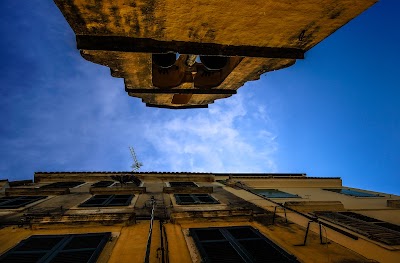
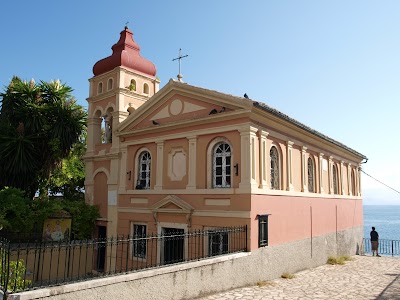
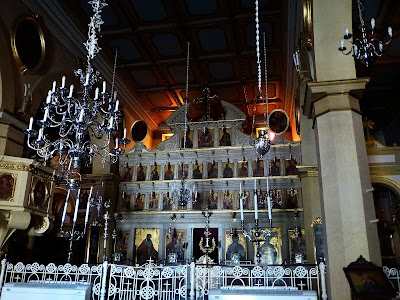
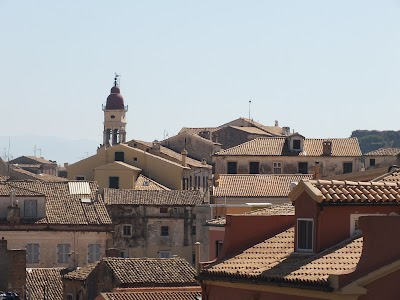
The Saint Spyridon Church is a Greek Orthodox place of worship located in Corfu, Greece. The Church is situated in the heart of Corfu town just behind the Liston. It is the most famous church in Corfu. The exterior of the church is typical of the Venetian architecture. Its distinctive red-dome bell tower is the highest point in the town. The bell tower built in 1620 is plain and squarely profiled in an Italian style. The ceiling of the church is divided into 17 parts by golden frames painted by the artist, Panagiotis Doxaras, in 1727. However due to humidity these initial painting was destroyed and was restored in 1852 by the artist Nikolaos Aspiotis.
Saint Spyridon, who is considered the keeper of Corfu and his relics can be found in the church behind the Altar, housed in a silver shrine made in Vienna in 1867. Devout Corfiots and pilgrims visit to kiss the reliquary and pray to the saint.
His relics are carried around the town of Corfu four times a year to celebrate his miracles: Palm Sunday (plague), Good Friday (Holy Saturday ?, starvation), August 11th (siege of the Turks in 1716), first Sunday of November (plague). The litanies are accompanied by the local bands and they remain a strong tradition on Corfu. On 12 December, the memory of the saint is celebrated.
Saint Spyridon was born in 270 A.D. in Assia, a village in Cyprus and was a shepherd who married and had a daughter. After his wife’s death, his daughter entered a convent and he vowed to lead a monastic life. He studied and gained wisdom and grace in the religious virtues and participated in the First Ecumenical Council of Nicaea (325). He reportedly converted a pagan philosopher to Christianity by using a potsherd to illustrate how one single entity (a piece of pottery) could be composed of three unique entities (fire, water and clay); a metaphor for the Christian doctrine of the Trinity. He served as a Bishop of Trimythous, a district of Larnaca Cyprus, until he died in 348 A.D. When the Arabs conquered Cyprus, his body was disinterred and taken to Constantinople but his remains were found intact with a sprig of Basil. After the fall of Constantinople in 1453, his relics were moved to Corfu.response / report this review -
20 September 2016
This is the Saint Spiridon church who is the patron saint of the city of Corfu. Spyridon was born in Askeia, in Cyprus. He worked as a shepherd and was known for his great piety. He married and had one daughter, Irene. Upon the death of his wife, Spyridon entered a monastery, and their daughter, a convent. Spyridon eventually became Bishop of Trimythous, or Tremithous (today called Tremetousia), in the district of Larnaca. He took part in the First Ecumenical Council of Nicaea (325), where he was instrumental in countering the theological arguments of Arius and his followers. He reportedly converted a pagan philosopher to Christianity by using a potsherd to illustrate how one single entity (a piece of pottery) could be composed of three unique entities (fire, water and clay); a metaphor for the Christian doctrine of the Trinity. As soon as Spyridon finished speaking, the shard is said to have miraculously burst into flame, water dripped on the ground, and only dust remained in his hand (other accounts of this event say that it was a brick he held in his hand). (text from Wikipedia)
response / report this review -
07 September 2016
The Saint Spyridon Church is a Greek Orthodox church. It was built in the 1580s and houses the relics of Saint Spyridon.
response / report this review -
16 December 2014
great
response / report this review