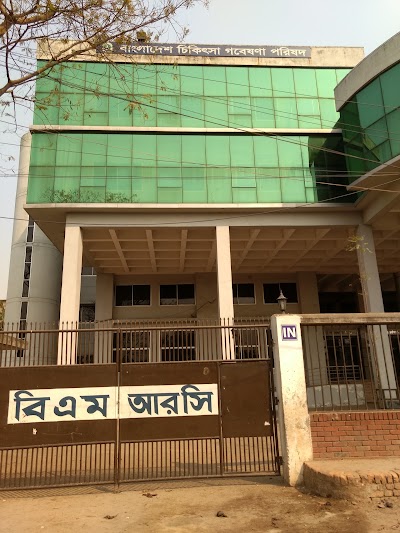
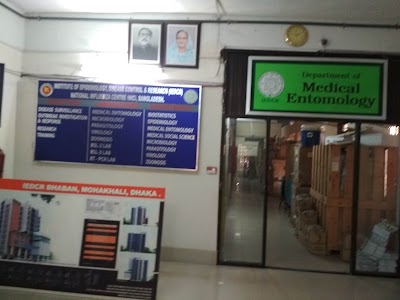
Institute of Epidemiology Disease Control And Research IEDCR
Mohakhali, Dhaka 1212About
Location :
Added by Jopie, at 14 December 2016
Opening Hours
- Monday 9:00 AM – 5:00 PM
- Tuesday 9:00 AM – 5:00 PM
- Wednesday 9:00 AM – 5:00 PM
- Thursday 9:00 AM – 5:00 PM
- Friday Closed
- Saturday Closed
- Sunday 9:00 AM – 5:00 PM
Gallery




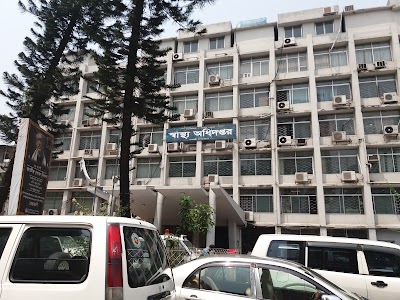
Add missing information
13 Reviews
-
07 May 2018
Good research centre for Epidemiological Disease control
response / report this review -
05 May 2018
Good research center.
response / report this review -
28 January 2018
One of the best performing Government institution of its kind..
response / report this review -
11 January 2018
IEDCR (Institute of Epidemiology Disease Control and Research) is the leading government institution on epidemiological research. It's an excellent organization who works with those diseases that can be outbreak in our locality like seasonal dengue, nipah virus outbreak, ebola, chikungunya etc. It's have its own dedicated surveillance team to trace and scrutiny every possible outbreak. It's have a highly equipped lab for work. It has proved it potential already.
response / report this review -
12 December 2017
Execellent public health institute
response / report this review -
03 December 2017
Only one Government institution Who are wark Dengu,& Chicongunia
response / report this review -
24 September 2017
its a government health related disease control centre in bd.
response / report this review -
14 July 2017
Its a main institute for drugs research
response / report this review -
06 June 2017
It is an gov organization that collect disease data, surveillance activity and investigate an outbreak occurrence
response / report this review -
24 May 2017
IEDCR stands for Institute of Epidemiology, Disease Control and Research. The present Institute of Epidemiology, Disease Control and Research (IEDCR) was established in 1976 through a bill approved in the Parliament which called for the establishment of an institute for epidemiological and communicable disease research as well as functioning of disease control programs mainly in the form of parasitic and entomological containment of vector borne diseases through application of epidemiological principles. At that time, Malaria Eradication Programme (MEP) was in its death throes and a much weaker Malaria control Programme (MCP) was established along the lines of the lessons learnt from the vicissitudes of an ambitious global programme that swept the world throughout much of the sixties and seventies.That should brings us to the fore the story of the institute that carried most of the responsibilities throughout the consolidation phase of the MEP. The institute, previously known as the Malaria Institute of East Pakistan (MIEP), was relocated toits present site in the early sixties from a government building in Old Dhaka.The two storied yellow building, where the present institute is situated, was actually the storehouse for thousand of tons of DDT and other chemicals and pesticides used for the MEP. Its other rooms were used for training of malaria officers from different parts of the country. The outhouse consisted of the animal house and a hatchery for breeding of mosquitoes. The administrative units and the officers of the departmental heads along with its general sections and laboratories were situated in the six storied building that now houses the Directorate General of Health Services (DGHS) adjacent to the storehouse.The Central Malaria Institute of East Pakistan itself was bisected from the Central Malaria Institute of India (CMII) in 1947 and received a few generous gifts through the division of assets between India and Pakistan, some of which still adorn the Director’s Chamber. The mahogany officer table and some regal chairs are the reminders of our colonial past. The CMII and then CMIP, leapfrogging from New Delhi to Karachi and finally to Dhaka in 1952, started functioning as MIP in 1954 in a government bungalow in Madan Mohan Basak Lane (now Tipu Sultan Road). The MEP grew in force and resources; not to be outdone by the anticipated growth spurt of a fledgling hinterland town of Dhaka into a provincial capital with its attendant trimmings. The functions of the institute were to advise the Government and local bodies on all issued related to malaria, to carry out epidemiological investigation, undertake systemic research into basic factors including malaria transmission, prevalence, vector bionomics and to teach and train officers and auxiliary personnel of MEP.Since 1961, the institute was functioning as WHO Malaria Eradication Training Centre (METC). Its contribution in the field of malaria and training of personnel made it possible to implement countrywide MEP. Till 1971, courses conducted were – Malaria Eradication Officers’ Course. Special Epidemiological Course. Junior Malaria Eradication Officers’ Course, Microscopists’ Course etc.
response / report this review -
18 April 2017
Gorgeous
response / report this review -
24 February 2017
Government institution
response / report this review -
21 December 2016
Helpful government organization, researching on infectious disease
response / report this review