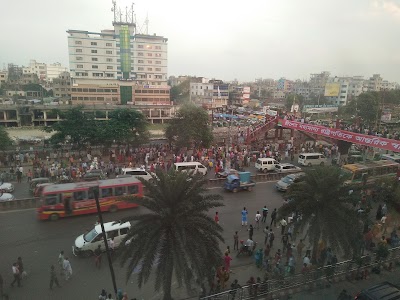
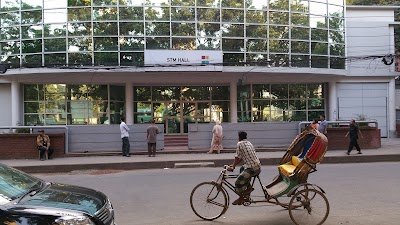
Dhaka Electric Supply Company Ltd.
22/B Kobi Faruk Sarani, Dhaka 1229About
Location :
Added by Jopie, at 02 December 2015
Opening Hours
- Monday 9:00 AM – 5:00 PM
- Tuesday 9:00 AM – 5:00 PM
- Wednesday 9:00 AM – 5:00 PM
- Thursday 9:00 AM – 5:00 PM
- Friday Closed
- Saturday Closed
- Sunday 9:00 AM – 5:00 PM
Gallery


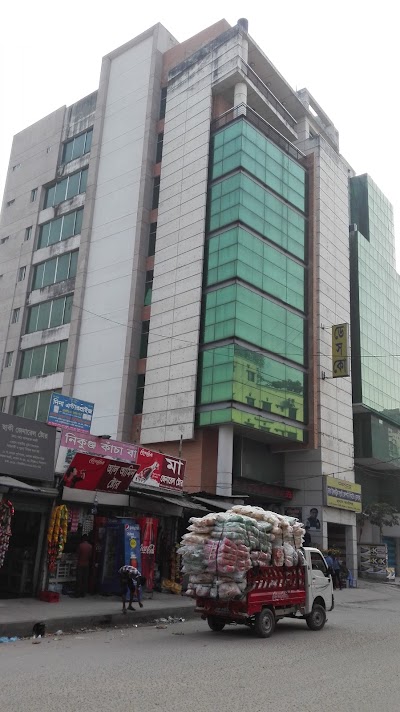

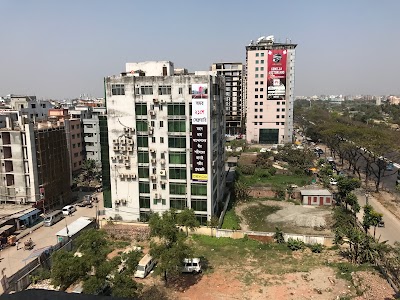
Add missing information
14 Reviews
-
21 September 2019
This is Desco head office. Don't get confused by Google map suggestion. I have been a victim already. 😂
response / report this review -
25 July 2019
This office provides prepaid meter recharge service.
response / report this review -
12 March 2019
DESCO, is a Public Limited Company under SEC. Its headquarter in nikunjo 2. Its serves electricity mainly in Dhaka gazipur and tangi zone.
response / report this review -
01 December 2018
DESCO It's our area's electrical company
response / report this review -
08 September 2018
Dhaka Electric Supply Company Limited, commonly known as DESCO, is a Public Limited Company which distributes electricity at the Northern parts of Dhaka City and Tongi Town of Gazipur District. The company was created on November 1996 under the Companies Act 1994 as a Public Limited Company. The company is now under the Power Division of the Bangladesh Ministry of Power, Energy and Mineral Resources[3] and serving a total number of 604,304 consumers as of 31 December 2013.
DESCO is one of the principal electric power distribution companies covering a stipulated zone of Mirpur area (comprising Kallayanpur, Kafrul, and Pallabi Sales & Distribution Division), Gulshan circle (comprising Gulshan, Baridhara, Uttara, Dakshinkhan Sales & distribution Division) and Tongi Pourashava Area. The total consumer strength now stands at 449,063 as of 30th June, 2011 with a maximum load demand of 640 MW. DESCO purchases electricity from government owned Bangladesh Power Development Board (BPDB) at a bulk tariff rate which is transmitted to DESCO through the transmission network of Power Grid Company of Bangladesh Limited (PGCB) in return for a wheeling charge. Then the electricity is sold to the different categories of retail consumers at retail tariff rate. This means that retail tariff is the sources of revenue and bulk tariff is the cost of sales for the company. Residential consumers held 87.94% of consumer mix for the company in 2011.response / report this review -
08 May 2018
The electricity supply industry in South Asia started with the commissioning of the first power station in the 1890s. Although a number on small stations were constructed over the next 20 years, these stations were isolated, catering to small distribution networks serving the major urban centers.
The first effort to structure a legal framework for the industry came in 1910 with the enactment of the Indian Electricity Act, 1910. This Act sought to regulate the business of industry still based on the old concept of isolated privately owned distribution networks fed by small generation stations & essentially defined the rights & obligations of the supplier and the consumer.
In 1947, at the time of independence of India & Pakistan, the installed generating capacity in the then East Pakistan was only 21 MW. Electricity was available to only a small elite in the district and sub-divisional headquarters. The distribution networks in these cities were isolated and were fed by coal fired steam power plants or diesel generation. In an effort to expeditiously augment generation capacity to feed a development economy, the then Government of Pakistan issued and ordinance in 1959 creating the East Pakistan Water and Power Development Authority (EWAPDA). The Ordinance essentially provided for the Governments takeover of all generation, Transmission and distribution facilities from the private sector, thereby creating a total Government monopoly in the sector. During 1960 to 1970 the generation capacity of the then East Pakistan rose from 88MW to 475 MW, supplied largely by natural gas and oil fired, steam power and hydro plants. The networks of Dhaka and Chittagong and then been interconnected albeit with weak 132 KV links.
Shortly after the creation of an independent Bangladesh, in 1972, the first Government of Bangladesh, in an effort to speed up the investment in the sector issued an Ordinance creating the Bangladesh Power Development Board (BPDB) as the successor organization of the power side of EWAPDA. The Ordinance recognized the divergence of energy related issues in development. During 1972 to 1995, BPDB has increased the generating capacity in the country to 2818 MW, and the length of its 230 and 132 KV transmission networks to 419 KM and 2469 KM. For the first time in December 1982, the eastern and western halves of the country were electrically connected through the commissioning of double circuit 230 KV transmission line across the Jamuna riever energized at 132 KV between Ishurdi and Tongi called the first East-West Interconnector. Generation sources were diversified to include a 230 MW hydropower station at Kaptai on the Karnaphuli river and natural gas and imported fuel based, open and combined cycle power plants at different locations of Eastern and Western part of the country. The distribution networks of all major towns and cities had been linked through 230 KV and 132 KV inter-ties.
In order to intensify the pace of rural electrification, the Government issued as ordinance in 1977 establishing the Rural Electrification Board (REB), a semi-autonomous agency charged with the responsibility of planning, developing, financing and construction of rural distribution networks, promoting the establishment of Rural Electric Cooperatives (Palli Bidyut Samities), handing over the constructed rural networks to them, assisting the PBSs to operate and maintain the rural networks and monitoring their financial performance. The REB has so far constructed over 46,000 Km of distribution lines and provided over 950,000 consumers connections in the rural areas (As on June, 95).response / report this review -
01 May 2018
I know this place very well. I everyday come to my home infront this building.
response / report this review -
02 March 2018
Head Office of Dhaka Electric Supply Company Limited (DESCO). DESCO distributes electricity at the different parts of Dhaka metropolis through their Sales and Distribution Divisions. DESCO has introduced the "CUSTOMER'S ONE POINT SERVICE CENTER" through each of the "Sales and Distribution Divisions" in respective areas.
response / report this review -
16 October 2017
The Head office of Dhaka Electricity Supply (DESCO)
response / report this review -
18 May 2017
It's the head office of Dhaka Electric Supply Company commonly known as DESCO, is a Public Limited Company which distributes electricity at the Northern parts of Dhaka City Corporation area. It's one of the best and oldest electricity company in Bangladesh.
response / report this review -
05 April 2017
This is the head office of DESCO. Once I went there to visit Managing Director in this building, I found everything is organized, neat and clean and people are helpful.
response / report this review -
19 November 2016
One of the best l electricity company in Bangladesh
response / report this review -
12 March 2016
Dhaka Electric Supply Company Limited, is a Public Limited Company which distributes electricity at the Northern parts of Dhaka City Corporation.The company was created on November 1996 under the Companies Act 1994 as a Public Limited Company. The company is now under the Power Division of the Bangladesh Ministry of Power,
response / report this review -
09 December 2015
DESCO & BREB is situated alongside in Nikunja 2.
response / report this review