About
Location :
Added by Jopie, at 21 March 2017
Opening Hours
- Monday 9:00 AM – 6:00 PM
- Tuesday 9:00 AM – 6:00 PM
- Wednesday 9:00 AM – 6:00 PM
- Thursday 9:00 AM – 6:00 PM
- Friday 9:00 AM – 6:00 PM
- Saturday 9:00 AM – 6:00 PM
- Sunday 9:00 AM – 6:00 PM
Gallery



Add missing information
10 Reviews
-
12 May 2018
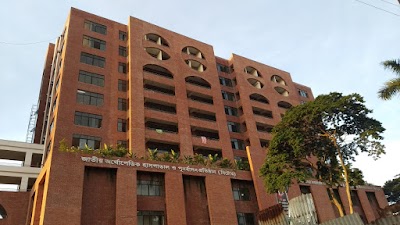
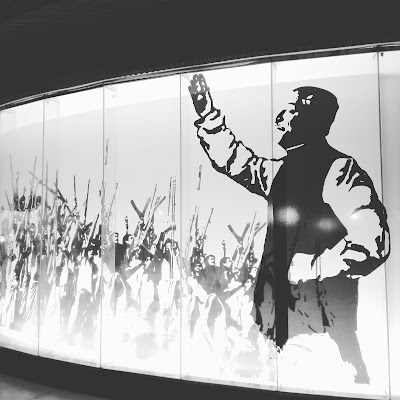
Bangladesh police liberation war museum is museum that commemorates the contributions of Bangladesh Police ti the Bangladesh Liberation War. It is located at Rajarbagh Police lines on 1.5 bigha (216,000 sq ft) land area and was established on 24 March 2013. It contains various materials and symbols which denote the sacrifice of police soldiers during the War. It has a research unit, the unit identified police officer killed in British Council premises during the Bangladesh Liberation War.
response / report this review -
18 December 2017
Memorable place in our country.
response / report this review -
13 December 2017
Highly recommend
response / report this review -
11 December 2017
Police freedom fighters
response / report this review -
09 December 2017
Awesome please I have ever seen in BD.
response / report this review -
01 December 2017
The revolutionary Bangladesh government took oath on April 17, 1971 at Bhaberpara village of Baidanathtala in the then Meherpur subdivision where many foreign journalists and thousand of people gathered. The then SDPO Mahbub Uddin Ahmed Bir Bikram instantly formed a team comprising police and ansar to give guard of honour to the newly formed government’s acting president Syed Nazrul Islam.
4. Formation of police headquarters
A.H.M Kamruzzaman, being the home minister of the Mujibnagar Government, urged all Bangalee officers working at different Pakistani ministries and departments, home and abroad to join under the newly formed government. Responding to the call, a great portion of police members joined Liberation War under different sectors while many others joined at different departments according to their merits. Along other departments of the Mujibnagar Government, police headquarters was also formed at East Pakistan’s deputy high commission’s office in Kolkata and the then DIG Abdul Khalek was the maiden IGP and Home Secretary of Bangladesh government.
Banglaee police members started to interact with the newly formed home ministry or police headquarters. The headquarters set up transit camp at Krishnanagar of Nadia district in India for the police members who had deserted West Pakistan and got them registered at the camp. After registration, the police headquarters took steps to send them to the battle fields and to other works according to their physical strength and merits. Police Headquarters also took steps for altering police uniforms during the period. Initially, the headquarters was formed only with 20 police officers and 15 to 20 officials.
“Actually due to his [Abdul Khalek] earnest effort, sincerity in a time befitting manner, led to the creation of the police headquarters” said Shailendra Kishore Chowdhury, a colleague of Abdul Khalek.
5. Police assistance to civil administration
It became easier to start functioning of civil administration maintaining law and order at the areas freed from invading forces as police headquarters remained vigilant in these areas. With the help of the then Public Works Ministry, police headquarters appointed SPs at every district on December 14, 1971 and the police headquarters was shifted to Dhaka in December 22, 1971.
6. Contribution to war strategy and providing training to freedom fighters
Police personnel first started preparation among themselves and then started regrouping people in different districts inspiring them to join freedom fight. Police also made contribution in providing arms training for local freedom fighters. Since the non-cooperation movement, the arms and manpower of police had been used for voluntary force setting a glaring example.
7. Providing freedom fighters with arms
During the period, every police station turned into a fort for freedom fighters. Since March1, 1971 freedom fighters, at many police stations, started taking training on arms under direct supervision of police during the nightfall. Police secretly handed over the .303 rifles which were kept at police stations and thus it became the first arms for freedom fighters in the battle field. Initially Rajshahi, Barisal, Khulna, Jhinaidah and Chittagong came forward in taking position for freedom fight.
8. Handin
The heroism, sacrifice and contribution made by police during Liberation War will be remembered in the history of Bangladesh. The names of many police member remained beyond notice even 41 years after the independence as the task of retrieving documents, among registered and other things, on freedom fighters became difficult.The maiden resistance of police force from Rajarbagh police lines, Khulna, Rajshahi, Sarda Police Academy, Comilla, among others, reflects their patriotism, sincerity, bravery and the self-sacrifice -- which earned them Shadinata Padak-2011" in course of timeresponse / report this review -
10 November 2017
Good
response / report this review -
20 October 2017
Great architecture and place
response / report this review -
14 September 2017
new experiments
response / report this review -
28 March 2017
Hi this is nice places?
response / report this review