About
Location :
Added by Jopie, at 30 March 2017
Opening Hours
- Monday Open 24 hours
- Tuesday Open 24 hours
- Wednesday Open 24 hours
- Thursday Open 24 hours
- Friday Open 24 hours
- Saturday Open 24 hours
- Sunday Open 24 hours
Gallery






Add missing information
17 Reviews
-
13 May 2018
Calm place. There are many folklore and beliefs that are related to the name Alu Vihara. According to some, the term Aloka Vihara (temple of light) later became Aluvihara as the pali word Alokawas referred to as Alu (light) in ancient Sinhalese language. Since the place was the abode of Buddhist monks, it was called a Viharaya. Hence the two words have been combined to make the term 'Aluvihara'.Another view is that, though the temple is situated in a rock cave with a huge rock in east, sunlight is not covered and disturbed by the rock. Therefore it was known as the Aloka lena (cave with light).However all these views and beliefs gives the conclusion, that the name of this temple is related with light.
response / report this review -
10 May 2018
One of the most religious and most attractive temple in Matale. Actually in Matale- Dambulla Road (4-5km away from Matale Town) Most of Buddhist tourists never forget to come here. Nice view when reach the top and its so calm when there are no crowd. Otherwise it will be lil bit different to spend some time there. There is an ancient library also.
response / report this review -
18 April 2018
Beautiful and historical temple with many places to look. A very important place to Buddhism. There is a hell ( yama lova ) to see too.
response / report this review -
09 March 2018
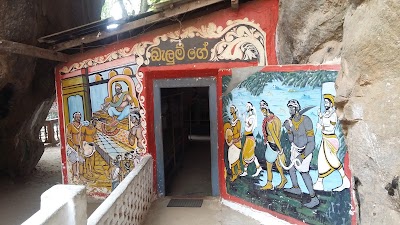
Buddhist shrine well preserved for years. Specially wall paintings. Good place to visit with large area and section to explore.
response / report this review -
06 February 2018
Beautiful ancient temple on the Matale Dambulla main road.
Free ample.parking is available.
Best time is to go is early morning before 7 am. People will flew to this place after that.
There is a historical background behind this temple.
The surroundings are also beautiful early morning. You can see Riverstone and other mountain ranges also clearly.
There was another statue at a higher place on a mountain. Same route can be used.response / report this review -
04 February 2018
Important historical place in Sri lanka
response / report this review -
01 February 2018
Nature's beauty with peace of mind. Visit there and experience that calmness!!!
response / report this review -
26 January 2018
it's amazing and very amazing and historical place in Sri Lanka..
Dambulla is the largest and best-preserved cave temple complex in Sri Lanka. The rock towers 160 m over the surrounding plains.There are more than 80 documented caves in the surrounding area. Major attractions are spread over five caves, which contain statues and paintings. These paintings and statues are related to Gautama Buddha and his life. There are a total of 153 Buddha statues, three statues of Sri Lanka kings and four statues of gods and goddesses. The latter include Vishnu and the Ganesha. The murals cover an area of 2,100 square metres (23,000 sq ft). Depictions on the walls of the caves include the temptation by the demon Mara, and Buddha's first sermon.response / report this review -
11 October 2017
This cave temple has two significant reasons for a traveler to visit.
Firstly is an ancient temple dating back to pre-colonization of Sri Lanka and its architecture and the location and rock caves are unique in its own.
Secondly this place was where Buddhist doctrine ( Thripitaka) which heather to conveyed from verbal form and generation of monks to the next, have been documented after a gathering of thousands of learned monks and consensus. it was documented in manuscripts of palm leaves.response / report this review -
30 September 2017
Ven. Dr. Inamaluwe Nandarathana Thera stated that it is believed that one set of the Tripitaka is placed in a rock at Aluvihara, one in the Abhayagiri dagaba and the other was in the Library at Aluvihara. More than three years had been taken to complete the writing which was completed on a Vesak Poya day.
King Walagamba had commanded all viharayas in the island to organise a ‘pahan pooja’ (lighting of oil lamps) to mark the event. This became an annual event where a ‘perahera'(procession) started from Rajamaha Kohon Viharaya to end at Aluviharaya. However, with time, this custom ceased.
In 1971, the Government Agent in Matale had discussions with the Ministry of Cultural Affairs and a Committee was formed to look into the historic and cultural aspects of Aluvihara. Thereafter it was declared an archaelogical heritage and protected area. This Committee approved the construction of two halls at the ‘Pahatha Maluwa’ for the use of worshippers.
In 1973, the ‘Sangayana Perahera’ recommenced to commemorate the writing of the Tripitaka and annually on the full moon Poya day of June, the perahera is conducted in Aluvihara, Matale.
It is on record that the scholar monk Buddhaghosa visited Aluvihara in the 5th century A.C. He read and checked on the commentaries of the Buddhist texts.
During the time of the Dutch, some Buddhist writings had been destroyed. Later in 1848 the British Army had invaded Aluvihara and burned and destroyed some manuscripts in the Library. However, the British Government had later restored the temple.
The present Viharadhipathy (Chief Incumbent) of the Aluvihara Rajamaha Viharaya is the Most Ven. Ethipola Medhankara Nayaka Thera. He invited an Ayurveda doctor and four others who knew how to write on talipot leaves and re-wrote the Tripitaka.
This took 10 years from 1981 to 1991. At present these talipot leaf manuscipts are placed in the library.
It is stated that King Maha Parakramabau of Polonnaruwa, King Nissanka Malla and King Sri Wijaya Rajasinha had preserved and renovated this most important religious and cultural Aluvihara Raja Maha Viharaya.
In more recent times there have been additions to enhance the beauty of the Aluviharaya. At the entrance a ‘ Makara Thorana ’ and ‘Athpavura’ (a wall with elephants) has been the constructed in 1986. The ‘Sanghavasa’ was renovated in 1997 with funds donated by a Korean Nayaka Thera.response / report this review -
05 September 2017
The Aluvihare Rock Temple is one of sacred Buddhist temple located in Aluvihare, Matale District of Sri Lanka
response / report this review -
28 August 2017
Ancient Buddhist temple that has evidence of writing lord Buddha's preaching for the first time in king Walagamba's era. Has a nice surrounding, many sites to see with historical value.
response / report this review -
17 July 2017
Beautiful site. Different rock cave temples and a beautiful point of view from the dagoba. Worth the visit of you have time. Do not forget to take your socks as it is quite dirty
response / report this review -
20 June 2017
Very clam and beautiful temple. You can see interesting surrounding
response / report this review -
13 June 2017
Beautiful place to visit in Matale. The place is very much historically important. The place where the 'Thripitaka'(book containg all the Buddhist teachings) was put onto ink and paper.
Please visit the place with decent light coloured clothes. There is ample amount of parking slots. Flowers can be bought at the parking area.response / report this review -
06 June 2017
A beautiful archeological site that has been pretty badly maintained. The temple is built within sheer rock faces and provided wonderful views from the top of the surrounding countryside. Sadly it is in a state of disrepair as it has been very poorly maintained. Aluvihare is the historical site where the teachings of Lord Buddha were first written down by monks.
response / report this review -
06 April 2017
It was a good experience to climb to top. I have visited Buddhist temples before but this felt very unique. As a photographer and a nature lover i did enjoy every bit of it.
response / report this review