Hippodrome
JerashAbout
Location :
Added by Jopie, at 08 March 2016
Opening Hours
- Monday 8:00 AM – 6:00 PM
- Tuesday 8:00 AM – 6:00 PM
- Wednesday 8:00 AM – 6:00 PM
- Thursday 8:00 AM – 6:00 PM
- Friday 8:00 AM – 6:00 PM
- Saturday 8:00 AM – 6:00 PM
- Sunday 8:00 AM – 6:00 PM
Gallery




Add missing information
9 Reviews
-
26 March 2018
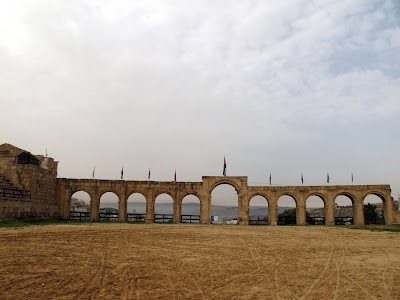
The smallest hippodrome on record in the Roman Empire and yet the best preserved/restored. The building was erected between 150-200 AD, and it was reused for different purposes after an earthquake made the hippodrome unstable for races at the second half of the fourth century. The damaged areas were then quarried and blocks were reused for the repairing of the city wall flanking the South Gate. The room across the Church of Marianos became the deacon's house which has nice mosaic floor (see review images). Other rooms became pottery kilns and tombs. The earthquake of 748 AD brought all secondary industrial activity in the Hippodrome to an absolute end.
After a long hiatus, the Roman legionary drill and gladiators fight that performs at this premises, seems to have returned. Morning show starts at 11 or 11:30 am and costs 12 JOD.
You can enter the Hippodrome from the main eastern gate, turn right and walk through the arena exiting by the northern entrance. After that, you have to turn right to rejoin the main thoroughfare to proceed to the visitor's center. There are toilets there.response / report this review -
12 February 2018
The smallest hippodrome on record in the Roman Empire and yet the best preserved/restored. The building was erected between 150-200 AD, and it was reused for different purposes after an earthquake made the hippodrome unstable for races at the second half of the fourth century. The damaged areas were then quarried and blocks were reused for the repairing of the city wall flanking the South Gate. The room across the Church of Marianos became the deacon's house which has nice mosaic floor (see review images). Other rooms became pottery kilns and tombs. The earthquake of 748 AD brought all secondary industrial activity in the Hippodrome to an absolute end.
There used to be a Roman legionary drill and gladiators fight show at this premises, but not anymore.
You can enter the Hippodrome from the main eastern gate, turn right and walk through the arena exiting by the northern entrance. After that, you have to turn right to rejoin the main thoroughfare to proceed to the visitor's center. There are toilets there.response / report this review -
18 November 2017
The smallest hippodrome on record in the Roman Empire and yet the best preserved/restored. The building was reused for different purposes after an earthquake made the hippodrome unstable for races. The room across the Church of Marianos used to be the deacon's house and has a mosaic floor. Other rooms have pottery kilns and tombs.
There used to be a Roman legionary drill and gladiators fight show at this premises, but not anymore.response / report this review -
17 October 2017
The smallest hippodrome on record in the Roman Empire and yet the best preserved/restored. The building was reused for different purposes after an earthquake made the hippodrome unstable for races. The room across the Church of Marianos used to be the deacon's house and has a mosaic floor. Other rooms have pottery kilns and tombs.
There used to be a Roman lectionary drill and gladiators fight show at this premises, but not anymore.response / report this review -
17 April 2017
Well represented history of this place through organized activities.
response / report this review -
28 July 2016
Just like athletic area. It may be very attractive when they have festival with horses with people in ancient clothes. Normal time, nothing.
response / report this review -
11 June 2016
Big and bold, love it.
response / report this review -
29 March 2016
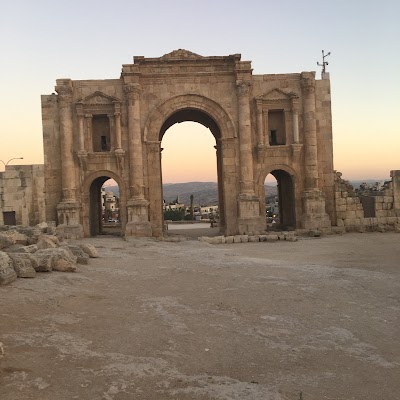
There is not all that much left and 1 of the less impressive sites in Jerash but it's right beside Hadrian's arch and worth looking at.
response / report this review -
15 March 2016
The hippodrome is not in the beat shape, but it is amazing to know that they used to race on such a high track. It is sort of scary to think if the horse goes crazy you might fall of the hill. You can actually ride horses around the hippodrome to get the real Roman experience.
response / report this review