About
Location :
Added by Jopie, at 31 July 2016
Gallery




Add missing information
16 Reviews
-
28 April 2018
Very nice and interesting place. Guide know s even polish!
response / report this review -
29 March 2018
Cultural site, please read about it before going there! Nice views.
response / report this review -
10 February 2018
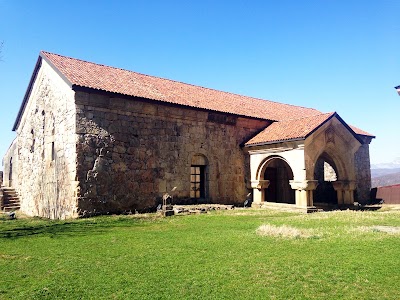
Gelati Monastery, eulogized as the " New Athens" and " the Second Jerusalem". was one of the greatest spiritual and cultural centers of Georgia in the Middle Age. The monastery was founded by King davit Agmashenebeli (1089-1125) in 1106.
At the monastery there functioned an academy, where there lived and worked outstanding Georgian scientists, philosophers and theologians.
Since 14th century Gelati has been an Episcopal Cathedral. central building of the Monastery is a central cupola church of the Virgin. Its interior is covered with paintings of different times. After apse is decorated with a brilliant mosaic composition of a standing Virgin holding the Child with archangels on her sides dated to 1125-1130. In the western narthex there are mural paintings of 12th century depicting seven ecumenical councils. Most of the murals in the Gelati were executed in the second half of 16th century.
Other architectural monuments of Gelati Monastery are of 12th and 14th centuries. These are:the Academy, Church of St. George, interior of which was painted in XVI century, a two storied building of the Church of St. Nicholas and bell tower, one of the oldest in Georgia.
Gelati Monastery was also a burial vault of Georgian Kings. At the Southern gates of the wall of monastery was a grave of King David.
Since 1994 Gelati Monastery has been inscribed upon the world heritage List of the Convention concerning the Protection of World Cultural and Natural Heritage.response / report this review -
18 January 2018
Stunning UNESCO site. Breathtaking view of the Caucasian mountain range. A ride from Kutaisi to here costs less than 1 USD by bus.
response / report this review -
07 December 2017
Gelati (Georgian: გელათის მონასტერი) is a medieval monastic complex near Kutaisi, in the Imereti region of western Georgia. A masterpiece of the Georgian Golden Age, Gelati was founded in 1106 by King David IV of Georgia and is recognized by UNESCO as a World Heritage Site.
Architectural type: Georgian; Monastery.
Founder : David IV of Georgia ("David the Builder").
Completed: Church of the Virgin, 1106 Churches of St. George and St. Nicholas, 13th century.
Criteria Cultural: (iv) Edit this on Wikidata
Reference: 710bis
Inscription: 1994 (18th Session)
Endangered: 2010–2017response / report this review -
18 October 2017
Medieval monastery, Georgian kings burial place, UNESCO heritage site, scenic place
response / report this review -
16 September 2017
Beautiful frescoes in a church undergoing renovation. Certainly worth a visit as very few churches I have seen contain the extensive collection. Buildings making up the complex are equally lovely.
response / report this review -
07 August 2017
Stunning historical monument that is an interesting representation of the architecture of Georgia. While wandering around, you travel back in time. Amazing place to relax and take wonderful pictures.
response / report this review -
02 August 2017
A masterpiece of the Georgian Golden Age, Gelati was founded in 1106 by King David IV of Georgia and is recognized by UNESCO as a World Heritage Site.
Gelati is the burial site of its founder and one of the greatest Georgian kings David IV.response / report this review -
15 July 2017
A building that is 1000 years old although right now undergoing some renovations but that doesn't take away from visiting as the inside is what is really spectacular. I didn't expect how fantastic the frescoes are. They dominate every wall and roof of the building.
To get here you can get a marshtutka from close to the theatre. They leave at 8am, 11am and 2pm. It's around a 40 minute journey. From here I ended up walking to Motsameta monastery which is about an hour walk down hill so you can combine both in a dayresponse / report this review -
06 July 2017
Gelati (Georgian: გელათის მონასტერი) is a medieval monastic complex near Kutaisi, in the Imereti region of western Georgia. A masterpiece of the Georgian Golden Age, Gelati was founded in 1106 by King David IV of Georgia and is recognized by UNESCO as a World Heritage Site.
response / report this review -
11 April 2017
Beautiful
response / report this review -
10 September 2016
UNESCO heritage registered.
response / report this review -
30 August 2016
Beautiful frescoes and impressive buildings. One of the highlights of the region. Restoration works currently underway.
response / report this review -
27 August 2016
The frescos are very beautiful. The monastery is definitely worth visiting.
response / report this review -
07 August 2016
Three Church in fresco torch is amazing. David King tomb of the building is also be.
response / report this review