Cyprus Folk Art Museum
Square of Archbishop Kyprianos, Πλ. Αρχιεπισκόπου Κυπριανού, Nicosia 1016About
Location :
Added by Jopie, at 13 April 2016
Opening Hours
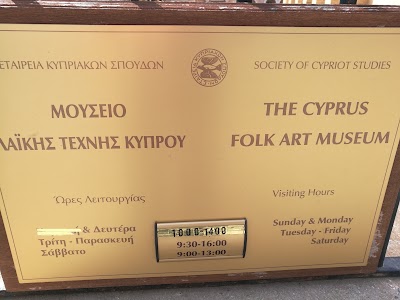
- Monday 10:00 AM – 2:00 PM
- Tuesday 9:15 AM – 4:00 PM
- Wednesday 9:15 AM – 4:00 PM
- Thursday 9:15 AM – 4:00 PM
- Friday 9:15 AM – 4:00 PM
- Saturday 9:00 AM – 1:00 PM
- Sunday Closed
Gallery





Add missing information
5 Reviews
-
20 May 2018
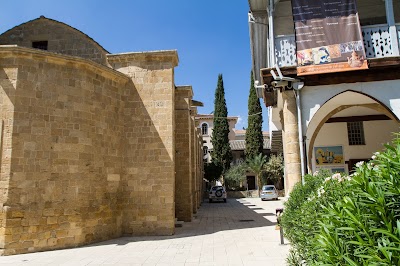
The building of the Museum dates back to the 15th century and is Gothic with earlier additions. In the beginning of the 13th century, the area was French (Latin) and was used as a monastery by the order of the Benedictines. Besides, the Order of St. John-Hospitaliers- built a church in honour of St. John, their patron saint. Hugo 1st was buried here in 1218. The Greek Orthodox Church began using it sometime before the Ottoman Occupation (1571-1878). The richly decorated Gothic arch with the 16th century fresco of the Annunciation, which bears the end of a Greek inscription was uncovered in 1950. The fresco was conserved in 1995 by the Society and the Department of Antiquities.Many of the items of this museum were donated, others were bought either directly from the villagers or from private collections. Most of the items were made in areas that are now occupied by Turkish troops. Samples of weaving, pottery, embroidery, lace, costumes, metalwork, woodcarving, basketry, leatherwork, naïve painting, agricultural and weaving tools are to be found in the museum collections. An important item is the door of St Mamas Church (19ος), that inspired the novel poet George Seferis. The poet refers to the little owl of the door on his poem “Little things of Cyprus”. The poem is dedicated to his friend and first Director of the Museum, Adamantios Diamantis. Today the number of items catalogued is over 5000
response / report this review -
09 November 2017
Lovely small museum, very well kept. Offers an immersive experience into traditional cypriot life.
Очень приятный маленький музей. В основном предметы быта и ремесленные изделияresponse / report this review -
15 December 2016
👍👍👍
response / report this review -
22 September 2016
Понравилось.
response / report this review -
20 April 2016
Хороший музей, неплохой, можно сходить и посмотреть. Но наверное второй раз не пошел бы
response / report this review