National Museum of Brazil
Quinta da Boa Vista - São Cristóvão, Rio de Janeiro - RJ, 20940-040About
Location :
Added by Jopie, at 05 August 2016
Gallery




Add missing information
12 Reviews
-
17 November 2020
Founded by King João VI of Portugal, Brazil and the Algarves on 6 June 1818, under the name of "Royal Museum", the institution was initially housed at the Campo de Santana park, where it exhibited the collections incorporated from the former House of Natural History, popularly known as Casa dos Pássaros ("House of the Birds"), created in 1784 by the Viceroy of Brazil, Luís de Vasconcelos e Sousa, 4th Count of Figueiró [pt], as well as collections of mineralogy and zoology. The museum foundation was intended to address the interests of promoting the socioeconomic development of the country by the diffusion of education, culture, and science. In the 19th century, the institution was already established as the most important South American museum of its type. In 1946, it was incorporated into the Federal University of Rio de Janeiro.
The National Museum held a vast collection with more than 20 million objects, one of the largest collections of natural history and anthropological artifacts in the world, encompassing some of the most important material records regarding natural science and anthropology in Brazil, as well as numerous items that came from other regions of the world and were produced by several cultures and ancient civilizations. Built-up over more than two centuries through expeditions, excavations, acquisitions, donations and exchanges, the collection was subdivided into seven main nuclei: geology, paleontology, botany, zoology, biological anthropology, archaeology, and ethnology. The collection was the principal basis for the research conducted by the academic departments of the museum – which are responsible for carrying out activities in all the regions of the Brazilian territory and several places of the world, including the Antarctic continent. The museum holds one of the largest scientific libraries of Brazil, with over 470,000 volumes and 2,400 rare works.
In the area of education, the museum offers specializations, extension and post-graduation courses in several fields of the knowledge, in addition to hosting temporary and permanent exhibitions and educational activities open to the general public. The museum manages the Horto Botânico (Botanical Garden), adjacent to the Paço de São Cristóvão, as well as an advanced campus in the city of Santa Teresa, in Espírito Santo – the Santa Lúcia Biological Station, jointly managed with the Museum of Biology Prof. Mello Leitão. A third site, located in the city of Saquarema, is used as a support and logistics center for field activities. Finally, the museum is also dedicated to editorial production, outstanding in that field the Archivos do Museu Nacional, the oldest scientific journal of Brazil, continuously published since 1876.response / report this review -
05 September 2020
The Brazil's oldest scientific institution.
response / report this review -
02 August 2018
Impressive work is done here - with such little money. Kids will love the mummies and dinosaurs.
response / report this review -
10 February 2018
Great place to chill and check out some amazing exhibits
response / report this review -
18 December 2017
Loved this museum. From meteors, across dinosaurs, Ancient Egypt, and many other stuff, the place brings excitement through every exposition.
response / report this review -
22 October 2017
Great museum and beautfull sorroundings. Mummys, dinosaurs and brasilian history in the same place
response / report this review -
11 May 2017
Good exposition of natural sciences. I feel that the Museum should tell me more about Pedro II, emperor of Brazil.
response / report this review -
21 March 2017
The biggest biological and natural collection in Brazil, with more than 9 million items, started by D. Pedro II and now belonged of Rio de Janeiro Federal University (UFRJ).
You can see dinosaurs, insects, mummies, brazilian's natives crafts and more in exhibitions.
The museum is located at Quinta da Boa Vista, a gorgeous park where it's possible to play with kids, have picnics, practice sports and have good time.
There are parking area inside, metro/train station and bus stop nearby. There are restaurant and snack bar inside of museum and outside, at the park.
A really interesting tour.response / report this review -
16 March 2017
Good exposition of natural sciences. I feel that the Museum should tell me more about the Pedro II, emperor of Brazil.
response / report this review -
21 February 2017
More than 9million items to look at, fantastic, great history and biology subjects. Good place for the entire family to visit.
response / report this review -
01 November 2016
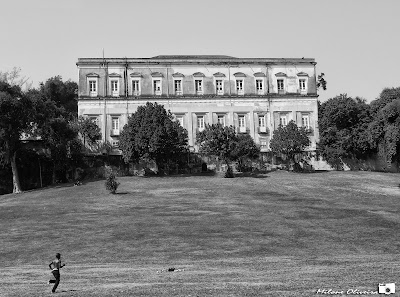
Worth visiting because of the historical significance of the building, and the park is nice. The museum itself has some interesting collections.
response / report this review -
12 August 2016
Very good museum, cheap. Has a little bit of everything, Brazilian history, dinosaurs. Must see with family or by yourself if your in Rio.
response / report this review