About
Location :
Added by Jopie, at 15 December 2016
Gallery




Add missing information
24 Reviews
-
29 April 2018
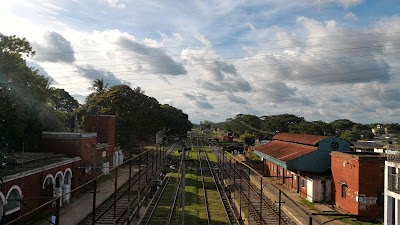
Biggest railway station and junction in the extreme northern side of Bangladesh. The station hold the important connection and junction with Rangpur, Dinajpur and Nilphamari with couples of intercity and local trains. The railway structures are huge here. Sign of British architecture in the buildings. Almost four platforms are in use. The railway infrastructures should be renovated and travellers waiting room and customer services should be upgraded and standardised.
response / report this review -
23 April 2018
One of the most important train station of the country scenes the British period. And there are still things that were used in that period. Now a days the government is bringing so be modern view in the station.
Some of the things are really very old that have to be changed and so they are repairing those. Because of it's one of the most important train station, it's very crowded and unclean.response / report this review -
11 April 2018
One of the old Junction of Bangladesh Railway. Many important train passes through the junction full day & night. Has Two platform for trains. There are nice & fully shed platforms for passengers. You will enjoy your time here.
response / report this review -
05 April 2018
Since the British period, this place has been playing an important role of railway junction. One of the most renowned places of historical as well as transport importance.
response / report this review -
22 March 2018
Parbatipur Railway Junction is one of the largest railway junction in Bangladesh. It's a busy & important railway junction for transferring peoples & goods. Besides this it has a fine natural view. Not also for travel people gather here in evening to pass their leasure by get together and chit-chat.
response / report this review -
27 February 2018
Intercity Trains From Parbatipur :
Train No
Name
Off Day
From
Departure
To
Arrival
705
Ekota Express
Tuesday
Parbatipur
18:10
Dinajpur
18:50
706
Ekota Express
Monday
Parbatipur
00:00
Dhaka
08:10
727
Rupsha Express
Thursday
Parbatipur
15:35
Chilahati
17:00
728
Rupsha Express
Thursday
Parbatipur
09:345
Khulna
17:40
731
Barandra Express
Sunday
Parbatipur
19:45
Chilahati
21:50
732
Barendra Express
Sunday
Parbatipur
07:45
Rajshahi
12:05
733
Titumir Express
Wednesday
Parbatipur
11:30
Chilahati
13:00
734
Titumir Express
Wednesday
Parbatipur
16:00
Rajshahi
21:10
747
Simanta Express
No
Parbatipur
04:50
Chilahati
06:20
748
Simanta Express
No
Parbatipur
20:30
Khulna
04:15
757
Drutajan Express
Wednesday
Parbatipur
04:00
Dinajpur
04:40
758
Drutajan Express
Wednesday
Parbatipur
10:15
Dhaka
18:10
765
Nilsagor Express
Monday
Parbatipur
16:10
Chilahati
17:45
766
Nilsagar Express
Sunday
Parbatipur
23:10
Dhaka
07:10
767
Dolanchapa Express
No
Parbatipur
19:20
Dinajpur
20:20
768
Dolanchapa Express
No
Parbatipur
07:10
Santahar
12:20
Mail/Express Trains From Parbatipur :
Train No
Name
Off Day
From
Departure
To
Arrival
7
UttarBanga Mail
No
Parbatipur
17:20
Panchagar
21:30
8
UttarBanga Mail
No
Parbatipur
14:25
Santahar
22:40
24
Rocket Express
No
Parbatipur
09:10
Khulna
23:45
27
Chilahati Express
No
Parbatipur
23:00
Chilahati
00:40
32
Uttara Express
No
Parbatipur
03:15
Rajshahi
10:20
41
Kanchan Express
No
Parbatipur
08:00
Panchagar
11:45
59
Ramsagor Express
No
Parbatipur
12:10
Dinajpur
13:20
60
Ramsagor Express
No
Parbatipur
16:50
Bonarpara
21:45
61
Dinajpur Commuter
No
Parbatipur
09:15
Birol
10:40
62
Dinajpur Commuter
No
Parbatipur
12:25
Lalmonirhat
14:50
64
Lalmoni Commuter
No
Parbatipur
05:55
Lalmonirhat
08:00
422
Lalmoni Commuter
No
Parbatipur
03:30:00 AM
Ramna
7:30
70
Parbatipur Commuter
No
Parbatipur
20:20
Lalmonirhat
22:25
Rangpur Commuter-2
No
Parbatipur
10:00
Lalmonirhat
11:50
Panchagar Commuter-1
No
Parbatipur
15:10response / report this review -
30 January 2018
During the British period all railway connections to Assam and North Bengal were through the eastern part of Bengal. From 1878, the railway route from Kolkata, then called Calcutta, to Siliguri was in two laps. The first lap was a 185 km journey along the Eastern Bengal State Railway from Calcutta Station (later renamed Sealdah) to Damookdeah Ghat on the southern bank of the Padma River, then across the river in a ferry and the second lap of the journey, which was a 336 km metre gauge line of the North Bengal Railway that linked Saraghat on the northern bank of the Padma to Siliguri.[1]
The 1.8 km long Hardinge Bridge across the Padma came up in 1912.[2] In 1926 the metre-gauge section north of the bridge was converted to broad gauge, and so the entire Calcutta - Siliguri route became broad-gauge.[1] Parbatipur came up as a station on the Calcutta-Siliguri route.
Once Parbatipur came up as a railway station on the Chilahati-Parbatipur-Santahar-Darshana Line in 1876, it became a centre of further railway development. There were two developments, one eastward and the other westward. North Bengal State Railway opened a metre gauge line to Kaunia in 1879. Two narrow gauge lines were laid by Eastern Bengal Railway from Kaunia to Dharla River. The Kaunia Dharla railway lines were converted to metre gauge in 1901. The Kaunia-Dharla line was extended to Amingaon in 1908. The Assam Behar State Railway started building westward in 1884 and by 1889, Parbatipur was connected with Katihar in Bihar.[3]
With the partition of India,railway links outside Bangladesh were lost but Parbatipur continued to be an important railway junction.response / report this review -
19 January 2018
Parbartipur rail station junction is one of the busiest junction in dinajour.
response / report this review -
09 January 2018
One of the biggest railway station and railway junction. Train of many place start from here. Almost always any train start or reach here.Old and crowdwd place.
response / report this review -
28 December 2017
Parbatipur is a railway junction in Dinajpur district of Rangpur Division in Bangladesh.
History: During the British period all railway connections to Assam and North Bengal were through the eastern part of Bengal. From 1878, the railway route from Kolkata, then called Calcutta, to Siliguri was in two laps. The first lap was a 185 km journey along the Eastern Bengal State Railway from Calcutta Station (later renamed Sealdah) to Damookdeah Ghat on the southern bank of the Padma River, then across the river in a ferry and the second lap of the journey, which was a 336 km metre gauge line of the North Bengal Railway that linked Saraghat on the northern bank of the Padma to Siliguri.
The 1.8 km long Hardinge Bridge across the Padma came up in 1912. In 1926 the metre-gauge section north of the bridge was converted to broad gauge, and so the entire Calcutta - Siliguri route became broad-gauge. Parbatipur came up as a station on the Calcutta-Siliguri route.
Once Parbatipur came up as a railway station on the Chilahati-Parbatipur-Santahar-Darshana Line in 1876, it became a centre of further railway development. There were two developments, one eastward and the other westward. North Bengal State Railway opened a metre gauge line to Kaunia in 1879. Two narrow gauge lines were laid by Eastern Bengal Railway from Kaunia to Dharla River. The Kaunia Dharla railway lines were converted to metre gauge in 1901. The Kaunia-Dharla line was extended to Amingaon in 1908. The Assam Behar State Railway started building westward in 1884 and by 1889, Parbatipur was connected with Katihar in Bihar.
With the partition of India,railway links outside Bangladesh were lost but Parbatipur continued to be an important railway junction.response / report this review -
19 November 2017
Very nice place.. best for travel
response / report this review -
01 November 2017
This Station is oldest stain of Bangladesh
response / report this review -
28 October 2017
My Home Town. And I love this place
response / report this review -
31 August 2017
One of the oldest railway junction of Bangladesh.
response / report this review -
15 July 2017
Wow, very nice railway junction ever. Very busy and very clean station. Really like it by heart.
response / report this review -
13 July 2017
This is the most important railway junction in Bangladesh.
response / report this review -
06 July 2017
One of the oldest Railway junction of this subcontinent. Old and big; when you will be in the station premises, it will be taken you to the past.
response / report this review -
22 June 2017
Parnatipur Railway Junction is one of the largest railway junction in Bangladesh. It's a busy & important railway junction for transferring peoples & goods. Besides this is has a fine natural view. Not also for travel people gather here in evening to pass their leasure by get together, gossiping.
response / report this review -
15 June 2017
nice place. one of the largest railway station in our country.
response / report this review -
03 April 2017
One of the renowned railway station in North Bengal
Little bit busyresponse / report this review -
29 March 2017
Nice station
response / report this review -
18 February 2017
popular Place in Dinajpur.
response / report this review -
02 January 2017
Big railway.. And looking Nice
response / report this review -
22 December 2016
it's largest railway junction of the country. it's very beautiful place.
response / report this review