About
Location :
Added by Jopie, at 01 May 2016
Opening Hours
- Monday Open 24 hours
- Tuesday Open 24 hours
- Wednesday Open 24 hours
- Thursday Open 24 hours
- Friday Open 24 hours
- Saturday Open 24 hours
- Sunday Open 24 hours
Gallery





Add missing information
19 Reviews
-
13 July 2020
Nice place ni my city
response / report this review -
01 June 2020
Nice Place.A historical Place.It's provide you a fresh mind
response / report this review -
10 March 2020
Khwaja Khan Jahan Ali Mosque and Sixty Dome Mosque UNESCO Certified Historical Full Land and Religious Faithful land,
response / report this review -
28 February 2020
It’s the best historical place.
response / report this review -
15 January 2020
Khan Jahan Ali was the ruler of the area in 15th century. Now his tomb is known as Khan Jhan Ali Majar. The majar looks nice and kept clean. You can pay a visit here if you come to Bagerhat. However, there might be different belief in you, but don't forget to enjoy the architecture and the surrounding environment.
response / report this review -
10 May 2018
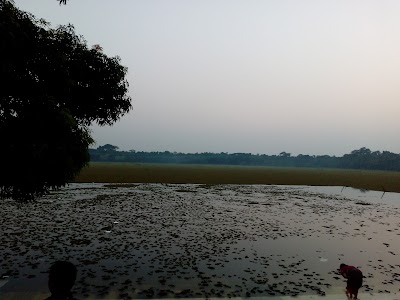
Khan Jahan Ali is situated at Bagherhat district. There You will see the Mazar of Khan Jahan Ali – a fine one storied building, It has a beautiful dome. Hazrat Khan Jahan Ali was buried there.There is a big pond in front of the Mazar, the local people call it the Dighi of Khan Jahan Ali. There are some crocodiles in the big pond. They come near fakirs call them and give them something to eat. I saw the Dighi with my own eyes and derived much pleasure.
response / report this review -
09 May 2018
It iis The shrine of Khan Jahan Ali (Uzbek: Jahonali Khon) (Bengali: খান জাহন আলি) d. ca. October 25, 1459, also known as Ulugh Khan and Khan-i-Azam, was an Muslim Sufi Saint and local ruler in Bagerhat ( in Bangladesh). The official title Khan-i-Azam signifies that he was an officer of the Bengal Sultan Nasiruddin Mahmud Shah I (1437– 1459). The word Ulugh before his name speaks of his Uzbekorigin. It is believed that he built the great Shait Gumbuj Mosque.
Khan Jahan, a noble under the Tughlaqs, seems to have come to Bengal just after the sack of Delhi (1398) by Timur. He acquired the forest area of the Sundarbans asjagir (fief) from the sultan of Delhi and subsequently from the sultan of Bengal. He cleared up the dense forest in the Sundarban area to set up human settlements.
He ruled over an area called Khalifatabad stretching up to Naldi to the north of Narailresponse / report this review -
11 April 2018
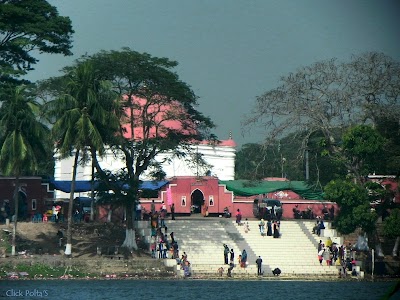
Absolutely it’s a great historical and a holy place to visit, whole Mazar complex has two main edifices (one is a mosque, and another one is a tomb) along with a large water tank and few graves. The right side complex is the tomb. People believe that the tomb has grave inside and it could be of Khan Jahan Ali who was a saint general of 15th century in Bagerhat City!
response / report this review -
13 March 2018
The whole Mazar (মাজার) complex has two main edifices (one is a mosque, and another one is a tomb) along with a large water tank and few graves. Theright side complex is the tomb. Peoplebelieve that the tomb has grave inside and it could be of Khan Jahan Ali (খান জাহান আলী) who was a saint general of 15th century. But many scholars though doubt about it (they believe it's someone else). On an inscriptionit is written that he died at 24-25 October of 1459. Lot of people use to come here everyday for praying. People call this as Mazar (মাজার).
response / report this review -
08 March 2018
Very nice historical place. But it's situation is degrading day to day
response / report this review -
18 January 2018
Beauty of muslim culture of 15th century is still present here. The holy grave of the saint Khan Jahan Ali is in Bagerhat, many wonders are around it.
response / report this review -
09 January 2018
Khan Jahan Ali
Khan Jahan Ali (Uzbek: Jahonali Khon) d. ca. October 25, 1459, also known as Ulugh Khan and Khan-i-Azam, was an Muslim Sufi Saint and local ruler in Bagerhat (now in Bangladesh). The official title Khan-i-Azam signifies that he was an officer of the Bengal Sultan Nasiruddin Mahmud Shah I (1437– 1459). The word Ulugh before his name speaks of his Uzbek origin. It is believed that he built the great Shait Gumbuj Mosque.
Khan Jahan, a noble under the Tughlaqs, seems to have come to Bengal just after the sack of Delhi (1398) by Timur. He acquired the forest area of the Sundarbans asjagir (fief) from the sultan of Delhi and subsequently from the sultan of Bengal. He cleared up the dense forest in the Sundarban area to set up human settlements.
He ruled over an area called Khalifatabad stretching up to Naldi to the north of Narail.response / report this review -
28 November 2017
Khan Jahan Ali (Uzbek: Jahonali Khon) d. ca. October 25, 1459, also known as Ulugh Khan and Khan-i-Azam, was an Muslim Sufi Saint and local ruler in Bagerhat (now in Bangladesh). The official title Khan-i-Azam signifies that he was an officer of the Bengal Sultan Nasiruddin Mahmud Shah I (1437– 1459). The word Ulugh before his name speaks of his Uzbek origin. It is believed that he built the great Shait Gumbuj Mosque.
Khan Jahan, a noble under the Tughlaqs, seems to have come to Bengal just after the sack of Delhi (1398) by Timur. He acquired the forest area of the Sundarbans asjagir (fief) from the sultan of Delhi and subsequently from the sultan of Bengal. He cleared up the dense forest in the Sundarban area to set up human settlements.response / report this review -
15 November 2017
nice place
response / report this review -
19 April 2017
Bagerhat, a great historical place. There You will see the Mazar of Khan Jahan Ali – a fine one storied building, It has a beautiful dome. Hazrat Khan Jahan Ali was buried there. The tomb is made of cut out stones. It cannot be accurately said where from these were brought. It is said that Pir Hazrat Khan Jahan Ali brought these from Chittagong by floating on water. On the tomb there are inscriptions in Arabic.
response / report this review -
27 March 2017
Excellent old architectural work, Muslim heritage
response / report this review -
03 March 2017
Muslim holy place in bd
response / report this review -
22 November 2016
Beauty of muslim culture of 15th century is still present here.
The holy grave of the saint Khan Jahan Ali is inBagerhat, many wonders are around it.
An amazing tour is possible in Bagerhat of Bangladesh to see not only an adventurous graveyard but also some historical but beautiful places. You can find here two of the oldest mosques, the Shat Gambuj Mosque and the one Gambuj Mosque.
In 1442 a muslim saint Ulugh Khan Jahan Ali came in Khalifabad (present Bagerhat) to spread the religion Islam. He used to live on the bank of a river and used to use crocodiles for good works. After his death there was situated a majar around his grave and the river died. But the crocodiles are still there from the time of his death.
Some of the crocodiles of the majar are thousands year old and they does not eat human body without hen and duck. So people can touch them truely without danger and people believe that the crocodiles can make any wish true. I became astonished after touching a crocodile for the first time.
Where the saint is sleeping down there are some strange manners also. The whole majar is decorated in 15th century and the design of former muslim culture is wonderful! The majar is standing here which is made of burn mud from 15th century.
Around the majar there seems like a fair. you can buy things like flute, cap etc. The road transport system is quiet good, available and easy so people come here everyday from different places. You can take an opportunity like me to see the signature of former culture at the majar of Khan Jahan Ali in Bagerhat.
The wind of nearby sea, the trees around a dead river site and the wonders of the majar can’t be neglected by you. Every angle of the environment will attract your sight.
response / report this review -
08 May 2016
A very holy place for Muslim people, but other religions people also visit the place for fulfill their prayers.
response / report this review