About
Location :
Added by Jopie, at 08 October 2015
Gallery


Add missing information
6 Reviews
-
22 April 2018
This is one of the oldest mosque in south Asia.
response / report this review -
10 March 2018
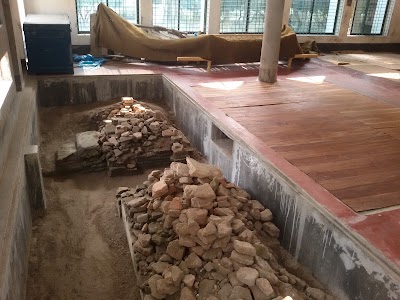
believe it is the oldest mosque of Bangladesh, as well as South Asia, as some ancient plaques were found at the site during excavation. The surrounding area of the mosque was partially dug up in 1987. Local people found huge ruins of minarets and other structures of the mosque. Some plaques carried inscriptions, including one with Kalema Taiyeba and the year 69 (Hijri) written in Arabic. Thus, according to that inscription, the mosque was built in 69 AH, or 690 AD. The plaque is now preserved at Tajhat Museum in Rangpur.
The ancient brick samples were sent to experts for investigation. Based on the information available, historians and researchers concluded that it is the oldest mosque of the Indian Subcontinent which was built by Sahaba-e-Kerams, along with the first Muslim community in Bangladesh in 69 AH. The researchers also revealed the mosque was built 61 years after Huaisheng Mosque at Guangzhou (Canton) city in China’s Guangdong province. The mosque, built in 8 AH (629 AD), is also known as Guangta Mosque (Light Tower Mosque).
The ‘Lost Mosque’ sank into the earth long ago. The area was earlier known as Mosder Ara, which locally means ‘a deep forest containing a mosque of ancient times’. According to local people, a mound developed there under a large `sheora' tree in course of time, perhaps due to an earthquake. Later, the whole area turned into a dense jungle.
Meanwhile, hundreds of villagers were evicted from their land when British Royal Air Force started constructing Lalmonirhat airport during World War II. The evicted families from the airport site went to areas near Mosder Ara for resettlement. The forest area was gradually cleared for constructing homes for them.
Some people bought land at Mosder Ara decades ago. The ruins of the mosque were first discovered in 1986 during clearing of the jungle to make the land arable. Later, investigation of the remote archaeological site proved it to be the oldest mosque in South Asia.response / report this review -
23 January 2018
The oldest Mosque of South Asia. Historical. It is now newly built again. It is at Lalmonirhat District, Upazila Lalmonirhat Sadar, Union Panchagarh, village Ramdas. It was built in 69 hijri ( 691 A D), which is written in a stone of the Mosque. It is said that it was built by Abu Waqqus (R), who was one of the Sahaba ( follower) of prophet Hajrat Muhammad ( SM). It proves that Muslims came in this region 1350 years ago.
response / report this review -
30 September 2017
mojidul
response / report this review -
08 January 2016
৬৯ হিজরী সময়ের মসজিদ।
response / report this review -
15 October 2015
its habby yet.
response / report this review