About
Location :
Added by Jopie, at 10 January 2017
Opening Hours
- Monday 6:30 AM – 8:30 PM
- Tuesday 6:30 AM – 8:30 PM
- Wednesday 6:30 AM – 8:30 PM
- Thursday 6:30 AM – 8:30 PM
- Friday 6:30 AM – 8:30 PM
- Saturday 9:00 AM – 5:00 PM
- Sunday 6:30 AM – 8:30 PM
Gallery


Add missing information
16 Reviews
-
17 March 2018
It's a beautiful place besides river bank
response / report this review -
27 January 2018
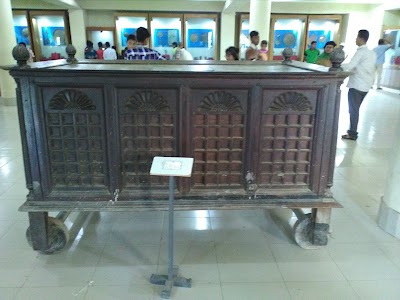
Lalbagh Fort Museum is Situated inside the Lalbagh Fort. Shayesta Khan (the 17th century AD) have been built this museum.
This Lalbagh Fort Museum is a two-storied building. A number of Mughal antiquities are on its display.
VISITING HOURS FOR MUSEUMS
1st April to 30th September :
Tuesday to Saturday:
(10 am to 6 pm & Leisure: 1 pm to 1.30 pm)
Friday: 10 am to 12.30 pm and 2.30 pm to 6pm
Monday: 2.30 pm to 6 pm
1st October to 30th March
Tuesday to Saturday:
(9 am to 5 pm & Leisure: 1 pm to 1.30 pm)
Friday: 9 am to 12.30 pm and 2 pm to 5 pm
Monday: 1.30 pm to 5pmresponse / report this review -
18 January 2018
Inside some old coin , and gun available , not allow take any photo inside the museum . once people go 1st floor now condition not good so just open ground floor 2 room for visitor. so other room closed
response / report this review -
17 December 2017
Lalbagh Fort (also Fort Aurangabad) is an incomplete 17th century Mughal fort complex that stands before the Buriganga River in the southwestern part of Dhaka, Bangladesh.[1] The construction was started in 1678 AD by Mughal Subahdar Muhammad Azam Shah who was son of Emperor Aurangzeb and later emperor himself. His successor, Shaista Khan, did not continue the work, though he stayed in Dhaka up to 1688.
response / report this review -
06 December 2017
Beautiful Moghol structure in Dhaka. . it is not complete structure . Before completing capital transfer to Musidabar .
Fort was very big today's we very small part of it.
Many valuable collection were missing.response / report this review -
22 November 2017
Mughal prince Muhammad Azam, third son of Aurangzeb started the work of the fort in 1678 during his vice-royalty in Bengal. He stayed in Bengal for 15 months. The fort remained incomplete when he was called away by his father Aurangzeb.
Shaista Khan was the new subahdar of Dhaka in that time, and he did not complete the fort. In 1684, the daughter of Shaista Khan named Iran Dukht Pari Bibi died there. After her death, he started to think the fort as unlucky, and left the structure incomplete. Among the three major parts of Lalbagh Fort, one is the tomb of Pari Bibi.
After Shaista Khan left Dhaka, it lost its popularity. The main cause was that the capital was moved from Dhaka to Murshidabad. After the end of the royal Mughal period, the fort became abandoned. In 1844, the area acquired its name as Lalbagh replacing Aurangabad, and the fort became Lalbagh Fort.response / report this review -
22 October 2017
Great historical things inside the museum..
Taking photographs are prohibitedresponse / report this review -
03 October 2017
This museum holds some of the mughal architecture and belongings from when mughal sebendar Shaista khan was in dhaka.
response / report this review -
02 October 2017
One of the biggest heritage in Dhaka. Though the museum is not that big. The building is old and not in good condition. Overall a nice historic place.
response / report this review -
04 September 2017
Very small & Information less museum, it's not appropriate with this awesome place. Authorities Should make it more organised & clean.
response / report this review -
28 July 2017
This museum is not that much big. But there is lots of thing that you should visit. Just the ground floor. This build is also an old building and not in good condition. This museum is also a part of Lalbagh Fort.
response / report this review -
29 April 2017
It's a beautiful place.It uphoalds the history of our Bangali Culture
response / report this review -
23 March 2017
They have nice collection of artifacts but the museum is a small one. It needs some renovation.
response / report this review -
14 March 2017
The museum can give us a lesson about the old history.
response / report this review -
25 February 2017
Can be said one of of the mystic place inside the city. This fort used to be the safe guard for old times Dhaka.
response / report this review -
17 January 2017
It's a very cool place. After visiting this place, I know a lot of things about the History of Bangladesh.
response / report this review