About
Location :
Added by Jopie, at 18 March 2017
Opening Hours
- Monday 9:00 AM – 5:00 PM
- Tuesday 9:00 AM – 5:00 PM
- Wednesday 9:00 AM – 5:00 PM
- Thursday 9:00 AM – 5:00 PM
- Friday Closed
- Saturday Closed
- Sunday 9:00 AM – 5:00 PM
Gallery






Add missing information
19 Reviews
-
24 May 2018
The jurisdiction of the Supreme Court of Bangladesh has been provided for in the Constitution of the People’s Republic of Bangladesh. Article 94(1) of the Constitution provides that there shall be Supreme Court for Bangladesh comprising the Appellate Division and the High Court Division. These two Divisions of the Supreme Court have separate jurisdictions. The sources of this jurisdiction, apart from the Constitution, are general laws (Acts of Parliament) of the country.
Jurisdiction of the Appellate Division
The Constitution has conferred on the Appellate Division the following jurisdictions:
a. Appellate Jurisdiction: Article 103 of the Constitution provides that the Appellate Division shall have jurisdiction to hear and determine appeals from judgments, decrees, orders or sentences of the High Court Division. An appeal to the Appellate Division shall lie as of right where the High Court Division- (a) certifies that the case involves a substantial question of law as to the interpretation of the Constitution; or (b) has sentenced or confirmed the sentence of a person to death or to imprisonment for life; or (c) has imposed punishment on a person for contempt of that division; and in other cases if the Appellate Division grants leave to appeal and also pursuant to Acts of Parliament.
b. Issue and execution of processes of Appellate Division: Under article 104, the Appellate Division shall have power to issue such directions, orders, decrees or writs as may be necessary for doing complete justice in any cause or matter pending before it, including orders for the purpose of securing the attendance of any person or the discovery or production of any document.
c. Power of Review: Article 105 provides that the Appellate Division shall have power, subject to the provisions of any Act of Parliament and of any rules made by the Division, to review any judgment pronounced or any order made by it. Part IV, Order XXVI of the Supreme Court of Bangladesh (Appellate Division) Rules, 1988 deals with the power and procedural matters of review of the Appellate Division.
d. Advisory Jurisdiction: Article 106 of the Constitution provides that if at any time it appears to the President that question of law has arisen, or is likely to arise, which is of such a nature and of such public importance that it is expedient to obtain the opinion of the Supreme Court upon it, he may refer the question to the Appellate Division for consideration and the Division may, after such hearing as it thinks fit, report its opinion thereon to the President.
e. Rule making power of the Supreme Court: Subject to any law made by Parliament, the Supreme Court may with the approval of the President, make rules for regulating the practice and procedure of each Division of the Supreme Court and of any Court subordinate to it.
Jurisdiction of the High Court Division
Article 101 of the Constitution provides that the High Court Division shall have such original, appellate and other jurisdictions, powers and functions as are or may be conferred on it by the Constitution or any other law.
a. Original Jurisdiction: Original jurisdiction of the High Court Division means that jurisdiction whereby it can hear a case or suit as Court of first instance. The Constitution has conferred on the High Court Division special Original Jurisdiction under Article 102 of the Constitution, under which the High Court Division can enforce fundamental rights guaranteed in Part III of the Constitution and can also exercise its power of judicial review. There are some other ordinary laws (Acts of Parliament) namely, The Companies Act, 1994; The Admiralty Court Act, 2000; The Bank Companies Act, 1991; Will and Probate under Succession Act, 1925; The Divorce Act, 1869; The Representation of the People Order, 1972; Bangladesh Merchant Shipping Ordinance, 1983; The Contempt of Courts Act, 1926 etc.) which fall under the ordinary/original jurisdiction of the High Court Division. Further jurisdictiresponse / report this review -
13 May 2018
The supreme court of Bangladesh. This is the place of justice. I have a good faith on this court.
response / report this review -
04 May 2018
Supreme court of Bangladesh. The court has
two divisions: High court division and Appellate
division. The court premises is so beautiful and large. It's a Wonderful place. Magnificent construction. The serene is just wonderful
and it's also very calm place.response / report this review -
27 April 2018
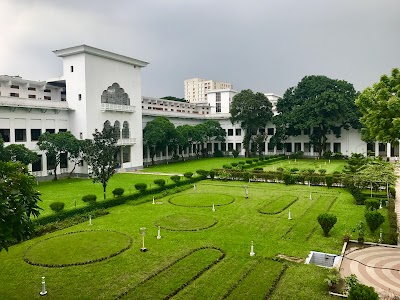
Wonderful place. Magnificent building and serene and calm court area. They keep green environment which i loved the most.
response / report this review -
08 March 2018
Supreme court of Bangladesh. The court has two divisions: High court division and Appellate division. The court premises is huge in size. This is a symbol of national judiciary supremacy. Bangladesh supreme court is headed by Chief Justice of Bangladesh.
response / report this review -
06 March 2018
The Supreme Court of Bangladesh (Bengali:বাংলাদেশ সুপ্রীম কোর্ট) is the highest court of law in Bangladesh. It is composed of the High Court Division and the Appellate Division, and was created by Part VI Chapter I of theConstitution of Bangladesh adopted in 1972. This is also the office of the Chief Justice,Appellate Division Justices, and High Court Division Justices of Bangladesh. As of March 2018 there are 4 Justices in Appellate Division and 80 (all are permanent) in High Court Division.
response / report this review -
20 January 2018
The Supreme Court of Bangladesh (Bengali: বাংলাদেশ সুপ্রীম কোর্ট) is the highest court of law in Bangladesh. It is composed of the High Court Division and the Appellate Division, and was created by Part VI Chapter I of the Constitution of Bangladesh adopted in 1972. This is also the office of the Chief Justice, Appellate Division Justices, and High Court Division Justices of Bangladesh. As of January 2018, there are 5 Justices in Appellate Division and 82 (all are permanent) in High Court Division.
response / report this review -
04 December 2017
The Supreme Court of Bangladesh (Bengali: বাংলাদেশ সুপ্রীম কোর্ট) is the highest court of law in Bangladesh. It is composed of the High Court Division and the Appellate Division, and was created by Part VI Chapter I of the Constitution of Bangladesh adopted in 1972. This is also the office of the Chief Justice, Appellate Division Justices, and High Court Division Justices of Bangladesh. As of November 2017, there are 5 Justices in Appellate Division and 84 (all are permanent) in High Court Division.
response / report this review -
14 November 2017
High court winter vacation ar jonno close hobe kobe thake????
response / report this review -
05 November 2017
Bangladesh Supreme Court has large and beautiful green gardens all around it. it looks stunning specifically early in the morning. At the evening nowadays u can find eye catching colorful lightning in its gardens n certainly it will be worthy to enjoy it at our spare times.
response / report this review -
21 September 2017
The Supreme Court is the highest court of law and justice. It has a high court division and an appellate division. The office of Chief Justice is also here.
response / report this review -
13 August 2017
The Supreme Court of Bangladesh (Bengali: বাংলাদেশ সুপ্রীম কোর্ট) is the highest court of law in Bangladesh. It is composed of the High Court Division and the Appellate Division, and was created by Part VI Chapter I of the Constitution of Bangladesh adopted in 1972. This is also the office of the Chief Justice, Appellate Division Justices, and High Court Division Justices of Bangladesh. As of August 2017, there are 6 Justices in Appellate Division and 85 (all are permanent) in High Court Division
response / report this review -
03 August 2017
Bangladesh Supreme Court has large and beautiful green gardens all around it. it looks stunning specifically early in the morning. At the evening nowadays u can find eyecatching colourful lightning in its gardens n certainly it will be worthy to enjoy it at ur spare times.
response / report this review -
20 May 2017
The supreme court stayed in center point of capital city.It's look very beautiful. It's well decorated by natural grass ,trees and flowers.
response / report this review -
04 April 2017
The Supreme Court of Bangladesh (বাংলাদেশ সুপ্রীম কোর্ট) is the highest court of law in Bangladesh. Its have a very big compound and a nice structure. It is composed of the High Court Division and the Appellate Division, and was created
response / report this review -
31 March 2017
The Supreme Court of Bangladesh (বাংলাদেশ সুপ্রীম কোর্ট) is the highest court of law in Bangladesh. Its have a very big compound and a nice structure. It is composed of the High Court Division and the Appellate Division, and was created by Part VI Chapter I of the Constitution of Bangladesh adopted in 1972. This is also the office of the Chief Justice, Appellate Division Justices, and High Court Division Justice of Bangladesh.
response / report this review -
29 March 2017
The Supreme Court of Bangladesh (বাংলাদেশ সুপ্রীম কোর্ট) is the highest court of law in Bangladesh. Its have a very big compound and a nice structure. It is composed of the High Court Division and the Appellate Division, and was created by Part VI Chapter I of the Constitution of Bangladesh adopted in 1972. This is also the office of the Chief Justice, Appellate Division Justices, and High Court Division Justice of Bangladesh.
response / report this review -
28 March 2017
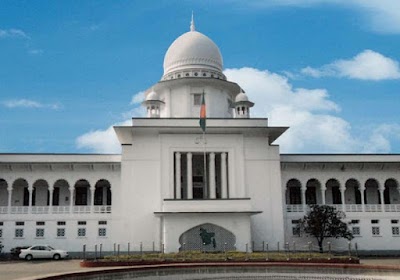
Supreme court of bangladesh one of the beautiful building in dhaka.
response / report this review -
25 March 2017
The territorial area of Bangladesh originally being a part and parcel of the then Indian Sub-continent, the history of its legal system may be traced back from the year of 1726,when King George-I issued a Charter changing the judicial administration of the Presidency towns of Calcutta, Bombay and Madras, through which the Civil and Criminal Courts, as established, started deriving their authority from the King. It is to be noted that during Mughal Empire the East India Company by taking settlement and with permission from Mughal Badshah created the three presidency towns namely Madras, Bombay and Calcutta and said East India Company introduced the English legal system for administration of the presidency towns and thus the English Judicial system got entry into the territory of Indian Sub-continent. The filing of the appeals from the then India in the Privy-Council in England was introduced by the said Charter of 1726 and thereafter to bring about change in the management of the then East India Company, the East India Company Regulating Act, 1773 was introduced to place the East India Company under the control of the British Government and provision was made for establishment of a Supreme Court of judicature at Fort William, Calcutta, through Charter or Letters Patent. The Supreme Court of Judicature at Fort William in Bangal was established by Letters Patent issued on March 26, 1774, which as a Court of Record had power and authority to dispose of all complaints against the Majesty's subjects in respect of any crime, suit or action arisen within the territory of Bengal, Bihar and Orissa. By an Act passed in 1833 the Privy-Council was transformed into an Imperial Court of unimpeachable authority, which played a great role as an unifying force for establishment of rule of law in the Indian Sub-continent. The judicial system of the then India was reorganized by introducing the Indian High Court's Act 1861 by which High Courts were established, abolishing the Supreme Courts at Fort William (Calcutta), Madras and Bombay, and the High Courts established were conferred with Civil, Criminal, Admiralty, Testamentary, Matrimonial jurisdictions with Original and Appellate Jurisdiction. With the transfer of power from the British Parliament to the people on division of the then India, the High Court of Bengal (order) 1947 was promulgated under the Indian Independence Act, 1947, and the High Court of judicature for East Bengal at Dhaka was established as a separate High Court for the then East Pakistan and the said High Court was commonly known as the Dhaka High Court and the same was vested with all Appellate, Civil and Original jurisdictions. With the enforcement of the Constitution of Islamic Republic of Pakistan in 1956, the Supreme Court of Pakistan was established as the apex Court of the country, consisting of East Pakistan and West Pakistan, in place of Federal Court, with the appellate jurisdiction to hear the decisions of the High Courts established in the provinces of the Pakistan. The Dhaka High Court had the jurisdiction to issue writs in the nature of Habeas Corpus, Mandamus, Prohibition, Quo-warranto and Certiorari, with further authority to declare any law promulgated violating the provisions of the Constitution as bad and void.
response / report this review