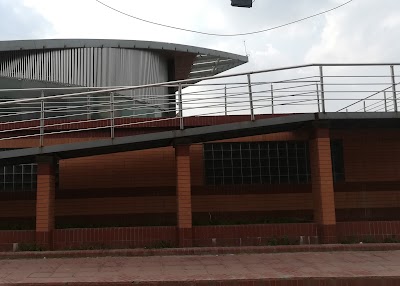
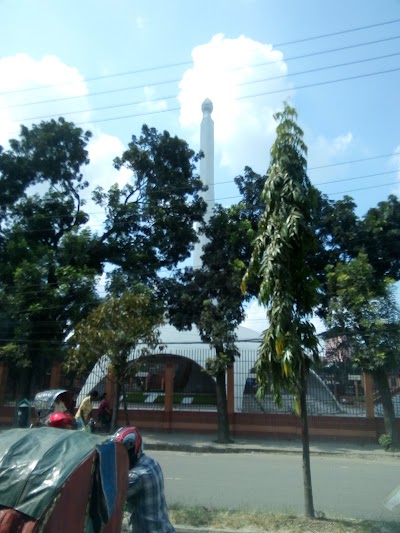
Bangladesh Police Liberation War Museum, Dhaka
Rajarbagh Police Lines School and College, DhakaAbout
Location :
Added by Jopie, at 20 January 2017
Opening Hours
- Monday 10:00 AM – 5:00 PM
- Tuesday 10:00 AM – 5:00 PM
- Wednesday Closed
- Thursday 10:00 AM – 5:00 PM
- Friday 10:00 AM – 5:00 PM
- Saturday 10:00 AM – 5:00 PM
- Sunday 10:00 AM – 5:00 PM
Gallery



Add missing information
18 Reviews
-
15 April 2019
There is proof of proficiency and experience every where. It is an architectural marvel.
It was great experience visiting Bangladesh Police Liberation War Museum. Best qualityresponse / report this review -
12 April 2019
Nice place to know about our Liberation War.
response / report this review -
03 April 2019
Bangladesh Police Liberation War Museum is a museum that commorates the contributions of Bangladesh Police to the Bangladesh Liberation War. It is located at Rajarbagh Police Lines on 1.5 bigha (216,000 sq ft) land area and was established on 24 March 2013. It contains various materials and symbols which denote the sacrifice of police soldiers during the War. It has a research unit, the unit identified police officer killed in British Council premises during the Bangladesh Liberation war.Habibur Rahman is the founder and President of Bangladesh Police Liberation War Museum..
The liberation war of Bangladesh took place in 1971. On 25 March 1971, the Pakistani Military attacked Rajarbagh Police Lines. The unarmed Bangalee police,being attacked unexpectedly,armed themselves with whatever they had. The armed with three knot three rifles etc to protect ownselves and protest against military. But, unfortunately, most of the police could not protest properly and were killed by the well-armed army. After about 42 years of their martyrdom,the Govt took steps to hold their memory. The museum,firstly,was inaugurated by the prime minister Sheikh Hasina,on the telecom building in Rajarbagh Police Lines on 24 March 2013.response / report this review -
21 December 2018
It was great experience visiting Bangladesh Police Liberation War Museum. There is proof of proficiency and experience every where. It is an architectural marvel.
response / report this review -
13 May 2018
The liberation war of Bangladesh took place in 1971. On 25 March,1971, the Pakistani Military attacked Rajarbagh Police Lines. The unarmed Bangalee police,being attacked unexpectedly,armed themselves with whatever they had. The armed with three knot three rifles etc to protect ownselves and protest against military. But, unfortunately, most of the police could not protest properly and were killed by the well-armed army. After about 42 years of their martyrdom,the Govt took steps to hold their memory. The museum,firstly,was inaugurated by the prime minister Sheikh Hasina,on the telecom building in Rajarbagh Police Lines on 24 March, 2013.
response / report this review -
26 April 2018
Tremendous place for people of the country to know about the role of police force in 1971 liberation war in Bangladesh. It has beautiful architecture and the interior is also nice. It will give a glimpse of history of Bangladesh from the police perspective and their contributions.
response / report this review -
21 April 2018
Bangladesh Police Liberation War Museum is a museum that commorates the contributions of Bangladesh Police to the Bangladesh Liberation War.[2] It is located at Rajarbagh Police Lines on 1.5 bigha (216,000 sq ft) land area and was established on 24 March 2013.[3] It contains various materials and symbols which denote the sacrifice of police soldiers during the War. It has a research unit, the unit identified police officer killed in British Council premises during the Bangladesh Liberation war.
response / report this review -
30 March 2018
Bangladesh Police Liberation Ware Museum is one of rich museum for its collection of our liberation ware. Its show how our nation secrifice for our fredom. In our liberation police play great roll great secrifice for there motherland. You can vist to know about our fredom fighter secrifice.
response / report this review -
25 January 2018
The revolutionary Bangladesh government took oath on April 17, 1971 at Bhaberpara village of Baidanathtala in the then Meherpur subdivision where many foreign journalists and thousand of people gathered. The then SDPO Mahbub Uddin Ahmed Bir Bikram instantly formed a team comprising police and ansar to give guard of honour to the newly formed government’s acting president Syed Nazrul Islam.
4. Formation of police headquarters
A.H.M Kamruzzaman, being the home minister of the Mujibnagar Government, urged all Bangalee officers working at different Pakistani ministries and departments, home and abroad to join under the newly formed government. Responding to the call, a great portion of police members joined Liberation War under different sectors while many others joined at different departments according to their merits. Along other departments of the Mujibnagar Government, police headquarters was also formed at East Pakistan’s deputy high commission’s office in Kolkata and the then DIG Abdul Khalek was the maiden IGP and Home Secretary of Bangladesh government.
Banglaee police members started to interact with the newly formed home ministry or police headquarters. The headquarters set up transit camp at Krishnanagar of Nadia district in India for the police members who had deserted West Pakistan and got them registered at the camp. After registration, the police headquarters took steps to send them to the battle fields and to other works according to their physical strength and merits. Police Headquarters also took steps for altering police uniforms during the period. Initially, the headquarters was formed only with 20 police officers and 15 to 20 officials.
“Actually due to his [Abdul Khalek] earnest effort, sincerity in a time befitting manner, led to the creation of the police headquarters” said Shailendra Kishore Chowdhury, a colleague of Abdul Khalek.
5. Police assistance to civil administration
It became easier to start functioning of civil administration maintaining law and order at the areas freed from invading forces as police headquarters remained vigilant in these areas. With the help of the then Public Works Ministry, police headquarters appointed SPs at every district on December 14, 1971 and the police headquarters was shifted to Dhaka in December 22, 1971.
6. Contribution to war strategy and providing training to freedom fighters
Police personnel first started preparation among themselves and then started regrouping people in different districts inspiring them to join freedom fight. Police also made contribution in providing arms training for local freedom fighters. Since the non-cooperation movement, the arms and manpower of police had been used for voluntary force setting a glaring example.
7. Providing freedom fighters with arms
During the period, every police station turned into a fort for freedom fighters. Since March1, 1971 freedom fighters, at many police stations, started taking training on arms under direct supervision of police during the nightfall. Police secretly handed over the .303 rifles which were kept at police stations and thus it became the first arms for freedom fighters in the battle field. Initially Rajshahi, Barisal, Khulna, Jhinaidah and Chittagong came forward in taking position for freedom fight.
8. Handin
The heroism, sacrifice and contribution made by police during Liberation War will be remembered in the history of Bangladesh. The names of many police member remained beyond notice even 41 years after the independence as the task of retrieving documents, among registered and other things, on freedom fighters became difficult.The maiden resistance of police force from Rajarbagh police lines, Khulna, Rajshahi, Sarda Police Academy, Comilla, among others, reflects their patriotism, sincerity, bravery and the self-sacrifice -- which earned them Shadinata Padak-2011" in course of timeresponse / report this review -
15 December 2017
After the March 7 historic speech, police personnel in Rajarbagh police lines was taking preparation for armed battle. There were 14 out of total 19 Subedars and Sergeants who were posted at the police lines during that period. To maintain secrecy, Bengalee police members adopted various tactics when they met frequently to fix their plan. Such practices were followed in different districts outside Dhaka like Pabna, Barisal, Chittagong, Rajshahi, Khulna under the leadership of concern Superintendents of Police.
response / report this review -
22 November 2017
With an eternal flame burning at its entrance, the Liberation War Museum is dedicated to the memory of the sacrifices made by soldiers and civilians during the Bangladesh Liberation War which took place from 26 March to 16 December 1971. Located in Dhaka, the capital city of Bangladesh, the museum opened its doors to the public on 22 March 1996 inviting visitors to view the extensive collection of items relating to this turbulent period of the country’s history which resulted in East Pakistan becoming the independent nation of Bangladesh.
The museum was started by community leaders who wanted to honor and preserve this event in the history of Bangladesh. The project grew as community members began donating mementoes, documents and other items relating to the Liberation War, as well as making donations for the funding of the museum. The Liberation War Museumcurrently has six galleries, with the first documenting the customs and traditions of Bengal and the country's struggle against colonial control. The second gallery focuses on the period of Pakistani rule, highlighting the resistance against the economic, political and cultural oppression of the people of East Pakistan. The third gallery documents the genocide of 1971, as well as the resistance and declaration of independence. The plight of war refugees is highlighted as part of this gallery. The three galleries on the second floor of the building offer insight into the trials and tribulations faced by the people of East Pakistan in their struggle for independence.
In addition to its permanent exhibitions at the museum building, the Liberation War Museum operates a mobile mini-museum which calls at schools in different regions of Bangladesh to acquaint the younger generation with the heroic struggle that resulted in the independence of the country they call homeresponse / report this review -
15 November 2017
Good museum for history of Bangladesh police.
response / report this review -
13 November 2017
Beautiful building and very good
response / report this review -
27 October 2017
Historical please
response / report this review -
07 October 2017
Established inside Rajarbag police lines. Just beside central telecom building. It presents the history of Bangladesh police and its contributions to liberation war.
response / report this review -
22 September 2017
Awesome looking museum
response / report this review -
12 September 2017
Nice place to know about the devotion of our police officers during the liberation war. Well decorated allover & the ticket price is 10 tk only.
response / report this review -
27 January 2017
nice place
response / report this review