Billimina Shelter
Goat Track, Glenisla VIC 3314About
Location :
Added by Jopie, at 30 January 2017
Gallery


Add missing information
2 Reviews
-
09 February 2017
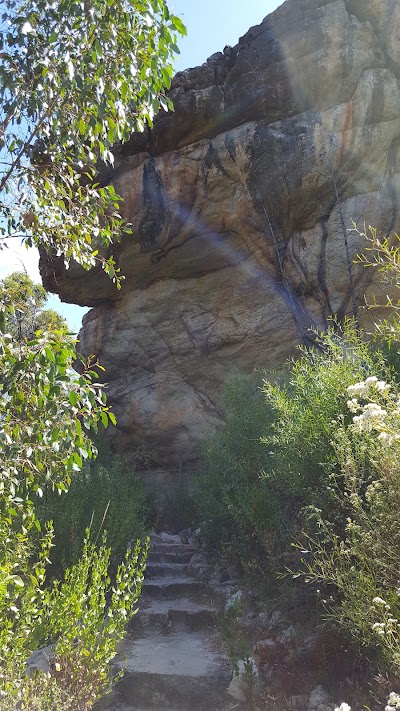
For the casual day walker, this short hike up a slightly overgrown track from a remote car park doesn't offer any physical challenge, but emotionally it is compelling . After maybe 50 minutes of climbing and avoiding sharp stones and overhanging bushes, through the misty afternoon, appeared Billimena shelter. At first sight, it looks simply like a large cubic rock dropped on the slight slope near the crest. As I approached, water, collected on the top, dripped into the center of a flat open area, protected from the prevailing South Westerlies by the rock itself. A variety of low native plants grew neatly around the edges, and coming to a natural flat stage, I saw rock face covered with drawings, in shades of ochre.
Thousands of finger paintings, men, women, children , some animals, abstract images. Some faded into antiquity, some more recent. It is like stumbling into a well preserved library in an ancient language.
I can imagine up to fifty people, a well fed Indigenous tribe, spending nights up at here, watching over the Eastward plains towards the sandy desert.
Before the colonists started sheep on the plains, it was reported that tens of thousands of Native Australians gathered each year to harvest the nutritious daisy Yams - as far as the eye could see, women worked together used sharp sticks to dig out the sweet tubers, and replant the daisies for the following season. This had been the way for tens of thousands of years in the fertile volcanic plains.
When the sheep were let loose, they fattened quickly. Within two years the Yams were all gone, never to return.response / report this review -
06 February 2017
Interesting paintings but obscured with the fence (probably so you can't touch it and destroy it) so cannot take good photo. Pity
response / report this review